
 Email-Id :
  Contact Us : 0172-521-4040 (India), +91-172-521-4040 (Outside India)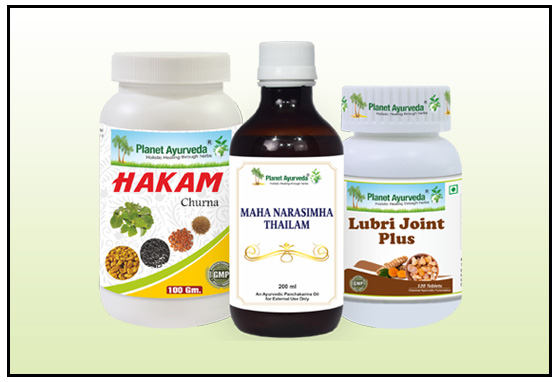
Description
Effective Herbal Remedies for Joint Problems
| S.No. | Products | Quantity |
| 1 | Hakam Churna | 2 Bottles (100 Gms Each) |
| 2 | Maha Narasimha Thailam | 2 Bottles (200ml Each) |
| 3 | Lubri Joint Plus | 1 Bottle (120 Tablets) |
ABSTRACT
Joints connect two or more bones and allow movement while providing stability to the skeleton.
They help in flexibility, weight bearing, and smooth coordination of body movements. Joint problems are very common these days, and it affects people of all ages. These conditions significantly impact mobility, quality of life, and overall physical independence. Joint disorders may arise due to degenerative changes, inflammatory processes, metabolic disturbances, infections, injuries, or lifestyle-related factors. According to the view point of Ayurveda, joint problems are primarily associated with the imbalance of Vata Dosha, often accompanied by Pitta or Kapha involvement, depending on the nature of the condition. This article presents a comprehensive overview of joint problems, including their causes, types, symptoms, diagnostic methods, Ayurvedic interpretation, and practical home remedies.
INTRODUCTION
Joints are specialised anatomical structures that connect two or more bones, allowing movement and providing mechanical support to the body. Healthy joints are essential for performing daily activities such as walking, sitting, lifting, and grasping objects. When joints become diseased or damaged, they can cause pain, stiffness, swelling, and restricted movement, thereby interfering with normal life. Joint problems are not limited to the elderly; they are increasingly seen in younger individuals due to sedentary lifestyles, improper posture, obesity, excessive physical strain, nutritional deficiencies, and chronic stress. Modern medicine classifies joint disorders based on pathology, while Ayurveda views them as systemic disorders involving Dosha imbalance, impaired Agni (digestive fire), and accumulation of Ama (metabolic toxins).
CAUSES OF JOINT PROBLEMS
Joint problems can develop due to multiple factors. Some of the major causes include:
- Ageing – Natural degeneration of cartilage and reduction in synovial fluid lead to stiffness and wear-and-tear of joints.
- Degenerative Changes – Gradual erosion of cartilage, as seen in osteoarthritis, results in friction between bones.
- Inflammatory Conditions – Autoimmune disorders such as rheumatoid arthritis cause chronic inflammation of joints.
- Metabolic Disorders – Conditions like gout occur due to the deposition of uric acid crystals in joints.
- Infections – Bacterial or viral infections may cause septic or reactive arthritis.
- Injuries and Trauma – Fractures, ligament tears, and repeated micro-injuries weaken joint structures.
- Obesity – Excess body weight increases mechanical stress on weight-bearing joints like knees and hips.
- Poor Diet and Lifestyle – Consumption of incompatible foods, lack of exercise, irregular routines, and disturbed sleep aggravate joint problems.
- Genetic Predisposition – Family history can increase susceptibility to certain joint disorders.
TYPES OF JOINT PROBLEMS
Joint problems are classified into several types based on their aetiology and clinical features:
1. Osteoarthritis
A degenerative joint disorder characterised by progressive cartilage loss, commonly affecting knees, hips, spine, and hands. It presents with pain, stiffness, and crepitus during movement.
2. Rheumatoid Arthritis
A chronic autoimmune inflammatory disease involving symmetrical joints, especially small joints of hands and feet. It is associated with morning stiffness, swelling, and deformities.
3. Gout
A metabolic joint disorder caused by elevated uric acid levels leading to crystal deposition, commonly affecting the big toe. Acute attacks are marked by severe pain, redness, and swelling.
4. Ankylosing Spondylitis
An inflammatory condition primarily affecting the spine and sacroiliac joints, leading to stiffness and reduced spinal mobility.
5. Infectious Arthritis
Occurs due to bacterial, viral, or fungal infection of the joint, causing severe pain, fever, and joint swelling.
6. Bursitis and Tendinitis
Inflammation of bursae or tendons around joints, often due to overuse or repetitive movements.
SYMPTOMS OF JOINT PROBLEMS
The clinical manifestations of joint problems vary depending on the type and severity of the disorder. Common symptoms include:
- Joint pain, which may be mild to severe
- Stiffness, especially after rest or in the morning
- Swelling and inflammation around the joint
- Reduced range of motion
- Warmth and redness over the joint
- Crepitus or cracking sounds during movement
- Fatigue and weakness in chronic inflammatory conditions
- Deformity in advanced stages
- Disturbed sleep due to pain
- Tenderness in the joint
DIAGNOSIS OF JOINT PROBLEMS
Diagnosis of joint problems involves a detailed clinical evaluation along with investigative procedures:
- Medical History: The doctor assesses the type, location, duration, and triggers of joint pain, along with any history of fever, injury, or family predisposition.
- Physical Examination:
- Inspection: Observing the joint for swelling, redness, deformity, or asymmetry.
- Palpation: Assessing warmth, tenderness, swelling, and muscle tone by touch.
- Range of Motion: Checking how much and how smoothly the joint can move.
- Muscle Strength: Evaluating the strength of muscles supporting the joint.
- Imaging Investigations (to assess joint structure):
- X-ray: Detects bone spurs, joint space narrowing due to cartilage loss, and bone damage.
- MRI: Provides detailed images of bones, cartilage, ligaments, tendons, and soft tissues.
- Ultrasound: Offers real-time visualisation of soft tissues, joint fluid, and helps guide injections.
- CT Scan: Gives cross-sectional images, useful for complex bone problems or subtle fractures.
- Blood Tests (to assess inflammation and autoimmune causes):
- Inflammatory Markers: ESR and CRP to assess inflammation.
- Rheumatoid Factor (RF) and Anti-CCP: Suggestive of rheumatoid arthritis.
- Serum Uric Acid: Helps in diagnosing gout.
- ANA Test: Used for lupus and other connective tissue disorders.
- Joint Fluid Analysis: Joint fluid may be aspirated to detect infection, crystal deposition (gout), or inflammatory changes.
AYURVEDA OVERVIEW OF JOINT DISEASES
According to Charaka Samhita, joint pain occurs mainly due to the aggravation of Vata Dosha and its localisation in the joints (Sandhi – articulations). A continuous exposure to Vata-aggravating factors (Vata-prakopaka nidana) such as excessive physical exertion, consumption of dry and cold food, irregular eating habits, suppression of natural urges, psychological stress, and ageing, leads to Vata Prakopa (aggravation of Vata). The aggravated Vata circulates throughout the body and settles in structurally weak areas known as Khavaigunya (sites of tissue vulnerability), particularly the joints, which are natural centres of movement. Due to the Ashraya-Ashrayi relationship (mutual dependence) between Vata Dosha and Asthi Dhatu (bone tissue), increased Vata results in depletion of bone tissue and reduction of Shleshaka Kapha (lubricating Kapha subtype present in joints). This causes dryness, loss of joint lubrication, and impaired nourishment of the joint structures. As a result, classical symptoms such as Shoola (pain), Stambha (stiffness), Sandhi Sphutana (crepitus or cracking sound in joints), and Cheshta Hani (restricted movements).
ACTIONS OF VATA DOSHA
संसव्यासव्यधस्वापसादरुक्तोदभेदनम्।।
सङ्गाङ्गभङ्गसङ्कोचवर्तहर्षणतर्पणम् 1
कम्पपारुष्यसौषिर्यशोषस्पन्दनवेष्टनम् ।।
स्तम्भः कषायरसता वर्णः श्यावोऽरुणोऽपि वा। कर्माणि वायोः- ( Ashtanga Hridyam Sutrastahana 12/ 49-50)
The actions of Vata Dosha include displacement of body parts from their normal position (Granthsa – dislocation or slipping of an organ), spreading or expansion (Vyasa), piercing-type pain (Vyadha), numbness of a particular part (Svapa), fatigue or depression (Sada), pain (Ruk), pricking pain like a needle (Toda), splitting or bursting pain (Bhedana), obstruction or blockage (Sanga), actual fracture or a sensation as if the body part is breaking (Anga-bhanga), contraction or shrinkage (Sankocha), twisting, rotation, or spasmodic movements (Varta – including Avarta, Parivarta, Vivarta), goosebumps or horripilation (Harṣaṇa), excessive thirst (Tarishana), tremors or shaking (Kampa), roughness or dryness (Paruṣya), hollowness or porousness of tissues (Sauṣirya), emaciation or drying of tissues (Shosha), twitching or pulsation (Spandana), a feeling of constriction or wrapping around (Vestana), stiffness or rigidity (Stambha), astringent taste sensation in the mouth (Mukha-kashayata), and discoloration of the affected part to blackish (Shyava) or reddish-brown (Aruna) color.
HERBAL REMEDIES FOR JOINT PROBLEMS BY PLANET AYURVEDA
Planet Ayurveda stands as a globally recognised Ayurvedic brand committed to restoring health through the wisdom of nature. It provides 100% pure, natural, and vegetarian herbal formulations developed under the guidance of experienced Ayurvedic doctors. All the products remain free from chemicals, additives, and preservatives, maintaining the highest standards of quality and authenticity. Planet Ayurveda clinically tests its formulations to deliver safe and effective results. Planet Ayurveda works to balance the body, mind, and soul by addressing the root cause of diseases through a holistic approach that focuses on herbs, diet and lifestyle. In this article, we will discuss the “Joint Care Pack” of Planet Ayurveda for Joint problems.
JOINT CARE PACK
- Hakam churan
- Maha Narasimha Thailam
- Lubri Joint Plus
PRODUCT DESCRIPTION
1. Hakam Churna
Ingredients of Hakam Churna:
- Chandershoor (Lepidium sativum): It reduces joint inflammation by inhibiting pro-inflammatory mediators due to its omega-3 fatty acids and antioxidant compounds. It helps relieve pain and stiffness by protecting cartilage and improving microcirculation in joint tissues.
- Kalonji (Nigella sativa): It alleviates joint problems by thymoquinone, which inhibits inflammatory cytokines and oxidative stress involved in arthritis. It reduces pain and stiffness by modulating immune responses and protecting joint cartilage from inflammatory damage.
- Methi (Trigonella foenum-graecum): It supports joint health by inhibiting inflammatory enzymes and reducing free-radical–induced cartilage damage due to its bioactive saponins and polyphenols. It improves joint flexibility and reduces stiffness by regulating immune-mediated inflammation and enhancing tissue nourishment.
- Ajwain (Trachyspermum ammi): It helps in joint problems through thymol, which exhibits strong anti-inflammatory and analgesic effects by suppressing inflammatory mediators.
Dosage:
½ tsp twice daily with plain water after meals.
2. Maha Narasimha Thailam
Ingredients of Maha Narasimha Thailam:
- Bilva (Aegle marmelos): Bilva reduces joint inflammation by inhibiting oxidative stress and inflammatory mediators involved in cartilage degradation. It supports metabolic regulation, indirectly preventing chronic inflammatory damage to joints.
- Ashwagandha (Withania somnifera): Ashwagandha root modulates immune response by down-regulating pro-inflammatory cytokines such as TNF-α and IL-6. It improves muscle strength and joint stability while slowing inflammatory degeneration.
- Gokshura (Tribulus terrestris): Gokshura exhibits antioxidant activity that protects joint cartilage from free-radical injury. It supports connective tissue integrity and improves mobility in degenerative joint disorders.
- Shyonak (Oroxylum indicum): Shyonak suppresses inflammatory enzymes and nitric oxide pathways involved in arthritic pain. It promotes tissue repair and reduces stiffness in affected joints.
- Bala (Sida cordifolia): Bala acts as a natural anti-inflammatory and neuromuscular tonic, reducing joint pain perception. It strengthens periarticular muscles, improving joint endurance and function.
- Paribhadra (Desmodium gangeticum): Paribhadra inhibits immune-mediated inflammation responsible for chronic joint swelling. It supports the regeneration of ligaments and soft tissues around joints.
- Atibala (Abutilon indicum): Atibala reduces inflammatory oxidative damage to cartilage through polyphenolic compounds. It improves joint lubrication and flexibility by supporting synovial nourishment.
- Agnimantha (Clerodendrum phlomidis): Agnimantha suppresses inflammatory mediators involved in joint degeneration and pain. It enhances circulation, reducing stiffness and restricted joint movement.
- Prasarini (Paederia foetida): Prasarini reduces inflammatory pain by modulating prostaglandin synthesis. It improves neuromuscular coordination and joint flexibility.
- Patla (Stereospermum suaveolens): Patla exhibits anti-arthritic activity by reducing synovial inflammation. It supports cartilage preservation and joint mobility.
- Til Taila / Sesame Oil (Sesamum indicum): Sesame oil contains sesamol and fatty acids that reduce oxidative cartilage damage. It improves joint lubrication and reduces stiffness through anti-inflammatory action.
- Go Dugdha / Caprae Lac – Cow’s/Goat’s Milk: Milk provides calcium, proteins, and growth factors essential for bone and cartilage repair. It supports joint tissue regeneration when digestion and metabolism are balanced.
- Shatavari (Asparagus racemosus): Shatavari modulates immune-inflammatory pathways and reduces tissue degeneration. It nourishes cartilage and improves joint resilience.
- Rasna (Pluchea lanceolata): Rasna inhibits inflammatory cytokines and oxidative stress in arthritic joints. It reduces pain, swelling, and movement restriction.
- Ashwagandha (Whole plant) (Withania somnifera): The whole plant provides broader antioxidant and adaptogenic effects. It reduces systemic inflammation and improves joint endurance.
- Misreya / Saunf (Foeniculum vulgare): Saunf reduces inflammatory stress by scavenging free radicals. It improves digestion, indirectly lowering toxin-induced joint inflammation.
- Devdaru (Cedrus deodara): Devdaru suppresses inflammatory signalling pathways in joint tissues. It improves blood flow and reduces chronic stiffness.
- Shalaparni (Desmodium gangeticum): Shalaparni regulates immune responses and reduces inflammatory joint damage. It enhances the strength and recovery of joint tissues.
- Prishnaparni (Uraria picta): Prishnaparni protects cartilage from oxidative and inflammatory injury. It improves joint flexibility and endurance.
- Mudgaparni (Phaseolus trilobus): Mudgaparni reduces inflammatory mediators responsible for joint degeneration. It supports the nourishment of connective tissues.
- Masaparni (Teramnus labialis): Masaparni inhibits oxidative stress contributing to joint wear. It supports long-term joint strength and mobility.
- Nagkesar (Mesua ferrea): Nagkesar suppresses inflammatory enzymes and reduces joint swelling. It protects connective tissue from oxidative breakdown.
- Saindhav Lavana (Rock Salt): Rock salt improves local circulation and reduces joint stiffness. It enhances the absorption of therapeutic substances in joint therapies.
- Haridra (Curcuma longa): Curcumin inhibits NF-κB signalling involved in chronic joint inflammation. It protects cartilage and reduces pain and swelling.
- Daruharidra (Berberis species): Berberine modulates immune-inflammatory pathways, damaging joint tissues. It helps prevent cartilage erosion.
- Shaileya (Parmelia perlata): Shaileya reduces oxidative stress linked to chronic arthritis. It protects joint tissues from inflammatory damage.
- Ela (Elettaria cardamomum): Ela improves microcirculation and reduces inflammatory oxidative stress. It supports joint metabolism and comfort.
- Manjishtha (Nardostachys jatamansi): Manjishtha reduces inflammatory toxins affecting joint tissues. It supports cartilage repair and reduces swelling.
- Yashti / Yashtimadhu (Glycyrrhiza glabra): Yashtimadhu inhibits inflammatory cytokines and protects connective tissues. It reduces pain and supports cartilage healing.
- Tagara (Valeriana wallichii): Tagara reduces neuro-inflammatory pain transmission. It relaxes muscles around inflamed joints.
- Musta (Cyperus rotundus): Musta suppresses inflammatory mediators and oxidative damage. It reduces joint swelling and stiffness.
- Tejpatra (Cinnamomum tamala): Tejpatra inhibits inflammatory enzymes involved in joint pain. It improves circulation and reduces stiffness.
- Tvak / Dalchini (Cinnamomum zeylanicum): Cinnamon reduces inflammatory cytokine activity. It improves blood supply to joint tissues.
- Jivaka (Microstylis wallichii): Jivaka enhances collagen synthesis and stimulates chondrocyte activity, promoting regeneration of joint tissues. It also reduces cartilage degradation by lowering oxidative stress and inflammatory mediators.
- Rishabhaka (Malaxis muscifera): Rishabhaka strengthens connective tissue by enhancing fibroblast function and reducing matrix metalloproteinase activity. It helps maintain joint integrity and prevents degenerative changes over time.
- Meda (Polygonatum verticillatum): Meda nourishes synovial membranes and improves lubrication within joints, supporting smooth movement. Its antioxidant compounds protect cartilage from free-radical–induced wear and tear.
- Maha Meda (Polygonatum cirrhifolium): Maha Meda stimulates tissue repair pathways and enhances cartilage resilience under inflammatory conditions. It also protects joint cells from oxidative damage while improving flexibility.
- Kakoli (Roscoea purpurea): Kakoli promotes anabolic repair of both cartilage and surrounding ligaments, enhancing joint stability. Its bioactive flavonoids reduce chronic inflammation and prevent connective tissue breakdown.
- Kshir Kakoli (Lilium polyphyllum): Kshir Kakoli improves synovial fluid production and nourishes cartilage cells. It alleviates stiffness and prevents desiccation of joint structures in degenerative conditions.
- Riddhi (Herminium edgeworthii): Riddhi enhances chondrocyte proliferation and reduces inflammatory enzyme activity in joints. It supports structural strength and helps maintain functional mobility.
- Vriddhi (Habenaria intermedia): Vriddhi aids the regeneration of cartilage and connective tissue while suppressing oxidative stress in joints. It also enhances joint resilience, making movement less painful in chronic arthritis.
- Hrivera (Pavonia odorata): Hrivera reduces local inflammatory heat and modulates immune-mediated joint inflammation. It also alleviates swelling and protects tissues from oxidative damage.
- Vacha (Acorus calamus): Vacha inhibits neurogenic inflammation, reducing pain signalling in joint nerves. It improves joint coordination and flexibility by enhancing microcirculation around affected areas.
- Palash (Butea monosperma): Palash decreases pro-inflammatory cytokines and protects cartilage extracellular matrix. It also promotes connective tissue regeneration and prevents joint degeneration.
- Sthauneya (Taxus baccata): Sthauneya acts as a potent antioxidant, protecting joints from oxidative stress–induced degeneration. It helps reduce inflammation and preserves the structural integrity of cartilage.
- Choraka (Angelica glauca): Choraka enhances microvascular circulation to inflamed joints, improving nutrient delivery. It also reduces joint stiffness and pain by modulating inflammatory mediators.
- Karpura (Cinnamomum camphora): Camphor provides topical analgesic and anti-inflammatory effects by stimulating sensory nerve endings. It also improves local blood flow and accelerates the healing of inflamed joint tissues.
- Kunkuma / Kesar (Crocus sativus): Saffron protects cartilage cells from oxidative damage and reduces inflammatory cytokine release. It also supports joint comfort and mobility by enhancing synovial fluid quality.
Dosage: Apply gently on the affected area and leave it for at least 6–8 hours for optimal results, or follow the guidance of your Ayurvedic physician.
3. Lubri Joint Plus
Ingredients of Lubri Joint Plus:
- Ficus religiosa (Peepal): Peepal contains flavonoids such as kaempferol, quercetin, and phenolic compounds like gallic acid and catechins, which reduce joint inflammation by suppressing pro-inflammatory enzymes. It also protects cartilage from oxidative stress and supports overall joint health.
- Commiphora mukul (Guggul): Guggul’s guggulsterones (steroidal compounds) and phenolic flavonoids like quercetin inhibit inflammatory cytokines and reduce swelling in arthritic joints. It promotes regeneration of connective tissue and improves joint mobility.
- Cissus quadrangularis (Asthisamharak): Cissus quadrangularis contains flavonoids like quercetin, kaempferol, and phenolic acids such as caffeic acid and gallic acid, which stimulate osteoblast activity and enhance calcium deposition, supporting bone and cartilage strength. It also exhibits anti-inflammatory effects that relieve pain and stiffness in joints.
- Terminalia arjuna (Arjuna): Arjuna bark contains tannins like arjunotannin, arjunin, and flavonoids such as luteolin and kaempferol, which reduce oxidative stress and inflammation in joint tissues. It helps protect cartilage and improves tissue repair, supporting joint flexibility.
- Withania somnifera (Ashwagandha – Root): Ashwagandha root contains flavonoids like quercetin and kaempferol, along with phenolic compounds, which reduce inflammatory cytokines like TNF-α and IL-6 while protecting joint cartilage from oxidative damage. It also enhances muscle strength and improves joint function.
Dosage: 2 tablets, twice daily, or as directed by a physician.
CONCLUSION
Joint problems can happen for many reasons and need timely care. Modern medicine can help relieve pain and check joint damage, but Ayurveda looks deeper, aiming to treat the root cause by balancing the body’s energies, improving digestion, and nourishing the joints. Some simple steps like eating healthy, following a good daily routine, and using natural home remedies can make a big difference. Combining early diagnosis, prevention, and holistic care can help keep your joints strong, flexible, and pain-free for the long term.
HOME REMEDIES FOR JOINT PROBLEMS
- Ginger (Adrak): Ginger possesses warming and anti-inflammatory properties. It can be taken as ginger tea several times a day or used regularly in cooking to help reduce joint pain and stiffness.
- Fenugreek (Methi) Seeds: Soaking fenugreek seeds overnight and consuming them with warm water in the morning helps reduce inflammation and supplies essential minerals that support bone and joint health.
- Ajwain (Carom Seeds): Drinking water prepared by soaking ajwain seeds or applying ajwain paste externally helps relieve joint inflammation and stiffness.
- Heat and Cold Compresses: Warm compresses or warm baths with Epsom salt help relax muscles and ease stiffness, while cold packs are useful for reducing acute inflammation after physical activity or injury.
- Herbal Pastes: External application of pastes prepared from ginger or drumstick (Moringa) leaves mixed with warm water helps reduce pain and inflammation in affected joints.


Reviews
There are no reviews yet.