
 Email-Id :
  Contact Us : 0172-521-4040 (India), +91-172-521-4040 (Outside India)
ABSTRACT
Pregnancy is a remarkable phase of life in which a new individual develops from the union of two reproductive cells. During the formation of these cells and the early stages of fetal development, changes in chromosome number can occur. These chromosomal abnormalities include conditions such as Down syndrome (Trisomy 21), Edwards syndrome (Trisomy 18) and Patau syndrome (Trisomy 13). Such conditions can influence fetal growth, organ development and the health of the newborn. Modern antenatal care provides several screening procedures that help assess the possibility of chromosomal abnormalities during pregnancy. One of the important first-trimester screening procedures is the Dual Marker Test, which evaluates specific biochemical markers in maternal blood and contributes to an overall risk assessment when combined with ultrasound findings and maternal factors. At the same time, Ayurveda gives considerable importance to preconception care (Garbhadhana), reproductive health and preparation of both parents before conception. Proper nutrition, healthy lifestyle, good digestion and appropriate Ayurvedic herbs can form an important part of this preparatory phase. In this article, we shall discuss the Dual Marker Test in detail, its purpose, timing, components and interpretation, followed by a discussion of Ayurvedic preconception care and herbs that support healthy reproductive function and preparation for conception.
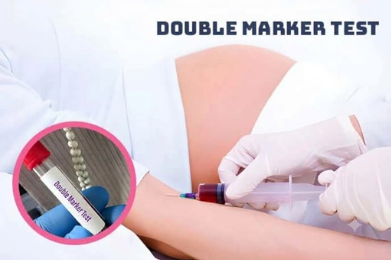
WHAT IS THE DUAL MARKER TEST?
The Dual Marker Test is a first-trimester blood screening test performed during pregnancy to assess the likelihood of certain chromosomal abnormalities. It measures two biochemical markers in the mother’s blood:
- Free beta-human chorionic gonadotropin (free beta-hCG)
- Pregnancy-associated plasma protein-A (PAPP-A)
These results are assessed along with factors such as maternal age, gestational age and ultrasound findings, particularly nuchal translucency (NT). The combined first-trimester screening assessment is generally performed during the early weeks of pregnancy, commonly around 11 to 14 weeks. The purpose is not simply to produce two laboratory values. The measurements are incorporated into a calculated risk assessment that helps the obstetrician decide whether additional evaluation is appropriate.
WHY IS THE DUAL MARKER TEST IMPORTANT?
Chromosomes contain the genetic information required for growth and development.
Most human cells contain 46 chromosomes arranged into 23 pairs. During the formation of eggs and sperm, chromosomes are distributed through a specialized cell division process. An error in this process can result in an embryo receiving an additional chromosome or, in some cases, a missing chromosome.
An additional chromosome is called a trisomy. The most frequently discussed trisomies in first-trimester screening are:
Trisomy 21 — Down Syndrome
Down syndrome occurs when there is an additional copy of chromosome 21. It can be associated with characteristic physical features, developmental differences and varying degrees of intellectual disability.
Trisomy 18 — Edwards Syndrome
Edwards syndrome occurs because of an additional copy of chromosome 18. It is associated with multiple developmental and structural abnormalities.
Trisomy 13 — Patau Syndrome
Patau syndrome results from an additional copy of chromosome 13 and can affect the development of several organ systems. The Dual Marker Test forms part of screening for these chromosomal conditions.
WHAT DOES “DUAL MARKER” MEAN?
The word “dual” refers to the two biochemical markers assessed in maternal blood.
These are Free beta-hCG and PAPP-A
Both substances are associated with pregnancy and placental function. Their levels change throughout pregnancy. Therefore, the laboratory does not simply compare the measured value with one fixed reference range. The result is adjusted according to gestational age and other relevant maternal factors.
The final assessment is then combined with ultrasound findings and other information to calculate the estimated likelihood of specific chromosomal abnormalities.
FREE BETA-HCG IN THE DUAL MARKER TEST
Human chorionic gonadotropin (hCG) is an important pregnancy hormone. The free beta subunit of hCG is measured as one component of the Dual Marker Test. The concentration of free beta-hCG differs according to the stage of pregnancy. Therefore, the laboratory interprets the result according to gestational age. A value that appears high or low on its own does not provide a diagnosis. The result becomes meaningful when incorporated into the complete first-trimester screening calculation.
PAPP-A IN THE DUAL MARKER TEST
Pregnancy-associated plasma protein-A (PAPP-A) is another important marker measured during first-trimester screening. It is produced largely by placental tissue and changes during pregnancy. Like free beta-hCG, PAPP-A is interpreted according to gestational age rather than through an isolated numerical value. The combination of PAPP-A, free beta-hCG, ultrasound measurements and maternal information contributes to the final screening assessment.
WHAT IS MOM IN THE DUAL MARKER REPORT?
A Dual Marker report often includes a term called MoM, meaning Multiple of the Median. MoM compares the mother’s measured marker level with the median expected value for a particular stage of pregnancy. This allows laboratory results to be adjusted for gestational age and other variables. MoM values are therefore more useful than simply looking at the raw concentration of PAPP-A or free beta-hCG. The final risk calculation uses these adjusted values together with other pregnancy information.
ROLE OF THE NT SCAN ALONGSIDE THE DUAL MARKER TEST
The Dual Marker Test is commonly considered together with the Nuchal Translucency (NT) scan. Nuchal translucency is the measurement of fluid collected at the back of the fetal neck during an early pregnancy ultrasound. The NT measurement is obtained during a specific period of fetal development and contributes to first-trimester screening for chromosomal abnormalities. An increased NT measurement does not automatically indicate a chromosomal abnormality. It is one component of the complete assessment. The obstetrician therefore considers:
- Maternal age
- Gestational age
- Free beta-hCG
- PAPP-A
- Nuchal translucency
- Fetal measurements
- Pregnancy characteristics
Before determining the overall screening result.
WHEN IS THE DUAL MARKER TEST PERFORMED?
The test belongs primarily to first-trimester screening. The combined screening assessment is generally performed around 11–14 weeks of pregnancy, depending on the pregnancy dating, fetal measurements and screening protocol. Timely pregnancy registration and regular antenatal visits help ensure that appropriate screening is performed within the recommended period. If first-trimester screening is not performed, other screening options can be discussed according to the stage of pregnancy.
HOW IS THE DUAL MARKER TEST DONE?
The blood component of the test is simple. A sample of maternal blood is collected and sent to the laboratory.
The laboratory measures Free beta-hCG and PAPP-A.
The results are then processed along with relevant maternal and fetal information. Ultrasound findings, particularly NT measurement, can be incorporated into the overall first-trimester screening assessment. The final report provides a calculated likelihood rather than confirming whether a chromosomal condition is definitely present.
SCREENING TEST VERSUS DIAGNOSTIC TEST
One of the most important things to understand about the Dual Marker Test is that it is a screening test. It does not confirm that a fetus has Down syndrome, Edwards syndrome or Patau syndrome. A higher-chance result indicates that additional assessment should be considered. A lower-chance result indicates a lower estimated likelihood but does not exclude every possible genetic or developmental condition. When additional assessment is required, the obstetrician can discuss options such as Non-Invasive Prenatal Testing (NIPT) or diagnostic procedures including Chorionic Villus Sampling (CVS) and amniocentesis.
HIGH-RISK DUAL MARKER RESULT
A higher-risk screening report can understandably create concern for parents. However, the result should always be interpreted in its proper context. A screening result represents a probability, not a confirmed diagnosis. The reported risk can be influenced by several factors, including:
- Maternal age
- Gestational age
- Biochemical marker levels
- NT measurement
- Fetal measurements
- Pregnancy characteristics
Therefore, a higher-risk report should lead to appropriate medical consultation rather than immediate conclusions. Additional screening or diagnostic testing can provide further information when indicated.
WHY PRECONCEPTION CARE MATTERS IN AYURVEDA
While the Dual Marker Test belongs to antenatal screening, Ayurveda places considerable importance on the period before conception. This is described through Garbhadhana (preconception care). Ayurveda gives importance to the health and nourishment of both prospective parents before conception. The aim is to prepare the body, reproductive tissues, digestion, nutrition and mental wellbeing for conception.
Important concepts include:
- Beeja (reproductive seed)
- Kshetra (reproductive field)
- Ambu (nourishment)
- Ritu (appropriate reproductive timing)
- Shukra (male reproductive tissue)
- Artava (female reproductive function)
This makes preconception care an important part of Ayurvedic reproductive wellness.
THE AYURVEDIC CONCEPT OF BEEJA
Beeja refers to the reproductive seed involved in conception. In modern biological terms, the egg and sperm carry genetic material contributed by the mother and father. Ayurveda places emphasis on maintaining the health and nourishment of reproductive tissues before conception. A comprehensive preconception plan therefore include:
- Proper nutrition
- Healthy digestion
- Adequate sleep
- Appropriate physical activity
- Stress management
- Menstrual health
- Reproductive wellness
- Correction of nutritional deficiencies
- Individualized Ayurvedic herbal care
This preparatory approach provides a foundation for healthy conception.
SHATAVARI FOR PRECONCEPTION REPRODUCTIVE CARE
Shatavari (Asparagus racemosus) is one of the important Ayurvedic herbs used in women’s reproductive wellness. Its roots contain steroidal saponins, including shatavarins, along with other phytoconstituents. From an Ayurvedic perspective, Shatavari is associated with Rasayana (rejuvenative support), female reproductive nourishment and Stree Prasuti-related care. It is commonly known for:
- Female reproductive nourishment
- Artava support
- General strength
- Healthy reproductive function
- Preconception wellness
- Maternal nutritional support
Shatavari can be selected during the preconception period according to the woman’s constitution, digestive status, reproductive health and individual requirements. It forms an important part of Ayurvedic reproductive wellness when prescribed appropriately.
PUTRAJEEVA FOR PRECONCEPTION SUPPORT
Putrajeeva (Putranjiva roxburghii) is an Ayurvedic botanical associated with reproductive care. Its use is particularly discussed in the context of preconception wellness and reproductive preparation. Ayurvedic fertility care focuses on supporting healthy reproductive function rather than reducing the entire process of conception to a single herb. Putrajeeva can therefore be considered as part of a broader preconception regimen based on:
- Reproductive health
- Proper nutrition
- Healthy digestion
- Appropriate lifestyle
- Individual constitution
- Male and female reproductive factors
Its selection and formulation should be individualized by a qualified Ayurvedic physician.
SHIVLINGI FOR PRECONCEPTION REPRODUCTIVE WELLNESS
Shivlingi (Bryonia laciniosa) is another herb frequently included in Ayurvedic reproductive formulations. It is associated with Beeja-related reproductive care and is used in certain preconception approaches. Shivlingi is generally discussed as part of a broader reproductive wellness plan rather than as an isolated solution. Ayurvedic assessment can consider factors such as:
- Prakriti
- Agni
- Artava
- Shukra
- Age
- Reproductive history
- Diet and lifestyle
This individualized approach helps determine whether a particular herbal formulation is appropriate for the person seeking preconception support.
SHATAVARI, PUTRAJEEVA AND SHIVLINGI: THE AYURVEDIC HERBS
These three herbs are used in Ayurvedic reproductive care because each has a place within preconception wellness. Shatavari (Asparagus racemosus) supports female reproductive nourishment and general strength. Putrajeeva (Putranjiva roxburghii) is included in selected reproductive formulations for preconception care. Shivlingi (Bryonia laciniosa) is used in certain Ayurvedic formulations associated with reproductive wellness and Beeja support. They are best considered as components of an individualized Ayurvedic program rather than as isolated remedies. The broader preconception plan should also address diet, digestion, sleep, physical activity and the reproductive health of both partners.
AYURVEDA AND MODERN PRENATAL SCREENING
Ayurvedic care and antenatal screening can be incorporated into the same pregnancy journey. The Dual Marker Test provides a first-trimester screening assessment for chromosomal conditions. Ultrasound provides information regarding fetal development and anatomy. Ayurvedic care focuses on:
- Maternal nourishment
- Digestive health
- Healthy daily routine
- Mental wellbeing
- Appropriate lifestyle
- Preconception reproductive health
Each approach has its own purpose. The result is a more comprehensive model of care in which reproductive wellness and appropriate antenatal screening are both given attention.
NUTRITION BEFORE CONCEPTION
Preconception nutrition deserves special attention. The body requires adequate, protein, iron, folate, vitamin B12, vitamin D, iodine, calcium, essential fatty acids, high-quality carbohydrates and dietary fiber. Adequate folate intake before conception and during early pregnancy is particularly important because it reduces the risk of neural tube defects. Ayurvedic dietary planning can be individualized according to Agni (digestive power), Prakriti (body composition), season and nutritional requirements. Food should be nourishing, digestible and appropriate for the individual’s constitution.
PREPARING BOTH PARTNERS FOR CONCEPTION
Preconception care should not focus exclusively on the woman. The health of both prospective parents contributes to conception. For women, attention should be given to:
- Menstrual regularity
- Nutrition
- Reproductive health
- Iron and folate status
- Digestive health
- Sleep
- Stress management
For men, attention should be given to:
- Shukra Dhatu (reproductive tissue)
- Nutrition
- Physical fitness
- Sleep
- Stress management
- Avoidance of tobacco and excessive alcohol
- General metabolic health
Ayurvedic assessment can help personalize dietary and herbal recommendations for both partners.
THE ROLE OF AGNI IN PRECONCEPTION AYURVEDA
Agni (digestive and metabolic function) occupies an important place in Ayurvedic care. Proper digestion supports the assimilation of nutrients required for tissue nourishment. A preconception program therefore focuses not only on what a person eats but also on how well the body digests and utilizes food. Appropriate meal timing, suitable food combinations, adequate sleep and individualized dietary planning support healthy Agni (digestion). When required, Ayurvedic physicians can select herbs and formulations according to the individual’s digestive status and constitution.
HEALTHY PREGNANCY BEGINS WITH RESPONSIBLE PREPARATION
A healthy pregnancy involves more than one test or one supplement.
It begins with preparation.
Before conception:
Healthy nutrition
↓
Good digestion
↓
Reproductive wellness
↓
Healthy lifestyle
↓
Individualized Ayurvedic care
↓
Preparation for conception
During pregnancy:
Regular antenatal care
↓
Appropriate ultrasound
↓
Recommended screening
↓
Maternal nutritional support
↓
Monitoring of fetal growth and development
The Dual Marker Test fits into this larger pregnancy-care framework.
CONCLUSION
The Dual Marker Test is an important first-trimester screening procedure that helps assess the likelihood of selected chromosomal abnormalities. By evaluating free beta-hCG and PAPP-A alongside ultrasound findings such as nuchal translucency and relevant maternal factors, it provides an individualized screening assessment during early pregnancy. At the same time, Ayurveda gives special importance to the period before conception through Garbhadhana (preconception care). Attention to Beeja, Artava, Shukra, Agni, nutrition, lifestyle and mental wellbeing creates a comprehensive approach to reproductive preparation. Ayurvedic herbs such as Shatavari (Asparagus racemosus), Putrajeeva (Putranjiva roxburghii) and Shivlingi (Bryonia laciniosa) are important components of selected preconception reproductive formulations. Their role is to support reproductive wellness and preparation for conception rather than to replace genetic screening. A thoughtful approach therefore brings together preconception Ayurvedic care, nourishing nutrition, healthy lifestyle practices and appropriate antenatal screening. The Dual Marker Test provides valuable information during early pregnancy, while Ayurvedic reproductive care can begin well before conception, helping couples approach parenthood with proper preparation and comprehensive care.
