
 Email-Id :
  Contact Us : 0172-521-4040 (India), +91-172-521-4040 (Outside India)
ABSRTACT
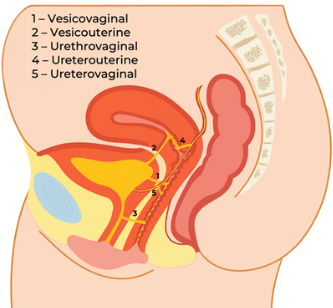
Urethrovaginal fistula (UVF) is an abnormal epithelialized tract connecting the urinary urethra and the vagina, resulting in continuous, involuntary leakage of urine. This debilitating condition often leads to significant physical discomfort, recurrent urogenital infections, and profound psychological distress. While conventional management relies heavily on surgical repair, patients frequently seek complementary and holistic approaches to support tissue healing, reduce local inflammation, and enhance overall urogenital resilience.
In traditional medical frameworks such as Ayurveda, urinary and vaginal disorders are interpreted through the lens of Mutravaha Srotas (urinary system) dysfunction, involving the deep aggravation of Vata and Pitta doshas, localized tissue depletion (Dhatu Kshaya), and accumulation of metabolic impurities (Ama). Ayurvedic management focuses on Vata-pacifying therapies (Vatashamana), tissue-rejuvenating botanicals (Rasayana), and formulations that promote wound healing (Vranaropana) and anti-inflammatory action (Shothahara). This article explores the comprehensive causes, clinical manifestations, diagnostic approaches, conventional interventions, and the targeted Ayurvedic management of urethrovaginal fistula using specific herbal formulations including Kaishore Guggul, Neem capsules, Ashwagandha capsules, Tribulus Power, and Boswellia Curcumin.
INTRODUCTION
Urethrovaginal fistula represents a challenging clinical entity within urology and gynecology, characterized by an abnormal communication between the urethral lumen and the vaginal canal. This anatomical defect disrupts normal urinary continence, causing persistent, involuntary urine leakage into the vagina, which can result in severe perineal dermatitis, chronic vulvovaginitis, and social isolation.
The pathogenesis of UVF is commonly linked to obstetric trauma during prolonged or obstructed labor, gynecological or urological surgeries (such as urethral diverticulectomy or anterior vaginal wall repair), pelvic radiation therapy, chronic catheterization, or localized trauma and malignancies. While anatomical closure via surgical intervention remains the cornerstone of conventional treatment, postoperative complications, tissue fibrosis, or delayed healing often necessitate supportive and regenerative care.
Integrating Ayurvedic principles into the care continuum offers a holistic perspective aimed at strengthening local tissues (Mamsa and Shukra/Artava Dhatu), modulating chronic inflammatory responses, and improving local circulation to optimize tissue healing environments.
CAUSES
The etiology of Encapsulating Peritoneal Sclerosis is categorized into secondary forms (most common) and idiopathic primary forms:
- Obstetric Trauma: Prolonged or obstructed labor leading to ischemic necrosis of the vesicovaginal and urethrovaginal septum remains a leading cause in developing regions.
- Iatrogenic Injuries: Complications arising from pelvic surgeries, including vaginal hysterectomy, anterior colporrhaphy, urethral diverticulectomy, sling procedures for urinary incontinence, and transurethral interventions.
- Radiation Therapy: Pelvic irradiation for gynecological malignancies causes microvascular obliteration, tissue ischemia, and delayed fistula formation.
- Infections and Inflammation: Severe chronic urinary tract infections, untreated pelvic inflammatory disease, or foreign bodies (such as eroded synthetic meshes or long-term indwelling catheters).
- Malignancy and Trauma: Direct invasion by urogenital tumors or penetrating pelvic trauma.
SIGNS AND SYMPTOMS
The clinical presentation of urethrovaginal fistula is distinct and significantly impacts a patient’s quality of life:
- Continuous Urinary Incontinence: Involuntary, constant leakage of urine into the vagina, independent of physical exertion or bladder fullness.
- Recurrent Urogenital Infections: Frequent urinary tract infections (UTIs) and persistent vaginitis due to constant moisture and altered local pH.
- Local Irritation and Dermatitis: Chronic excoriation, burning, pruritus, and excoriation of the vulvar and perineal skin due to prolonged exposure to urine.
- Psychosocial Distress: Significant anxiety, depression, and social withdrawal resulting from continuous leakage and malodor.
- Dyspareunia: Pain or discomfort during sexual intercourse secondary to scar tissue formation and localized inflammation.
INVESTIGATIONS
Accurate anatomical localization and sizing of the fistula tract are essential for determining the appropriate management strategy:
- Clinical Examination: Comprehensive pelvic and speculum examination, often utilizing a double-speculum or methylene blue dye test to visualize the fistulous opening along the anterior vaginal wall.
- Cystourethroscopy: Direct visualization of the urethral mucosa to identify the internal opening of the fistula relative to the bladder neck and external urethral meatus.
- Imaging Studies: Voiding cystourethrography (VCUG), retrograde urethrogram (RUG), or pelvic magnetic resonance imaging (MRI) to delineate the exact tract anatomy and assess surrounding tissue health.
- Urodynamic Studies: Performed to evaluate baseline bladder storage, compliance, and sphincter function prior to planning definitive closure.
MANAGEMENT
Conventional management of urethrovaginal fistula primarily revolves around surgical reconstruction, though conservative measures may be attempted in very small, acute, or early-stage fistulae.
- Conservative Measures: Continuous bladder drainage via an indwelling Foley catheter for 4 to 6 weeks, combined with management of local infections and estrogen therapy in postmenopausal women to promote mucosal healing.
- Surgical Repair: Transvaginal or transabdominal surgical excision of the fistulous tract with multi-layered closure and healthy tissue interposition (such as a Martius flap or labial fat pad) to ensure tension-free healing.
- Supportive and Regenerative Care: Postoperative wound care, infection control, and complementary herbal protocols to enhance tissue regeneration and reduce localized inflammation.
AYURVEDIC VIEW AND MANAGEMENT
In Ayurveda, urethrovaginal fistula can be understood through the disruption of Mutravaha Srotas (channels of urine transportation) and Artavavaha Srotas (female reproductive channels). The fistulas are known as Bhagandar in Ayurveda. The condition manifests due to deep-seated Vata and Pitta dosha aggravation combined with Dhatu Kshaya (tissue depletion) and localized obstruction or structural trauma (Sanga and Vrana).
When Vata is vitiated, it causes dryness, pain, and degeneration, while aggravated Pitta introduces heat, inflammation, and potential suppuration or chronic unhealed ulceration (Dushta Vrana). Ayurvedic management focuses on Vatashamana (pacifying Vata), Raktashodhana (purifying blood and microcirculation), Shothahara (anti-inflammatory action), and Vranaropana (wound healing and tissue regeneration).
AYURVEDIC FORMULATIONS FOR UROGENITAL HEALTH
Planet Ayurveda provides authentic, high-quality herbal formulations crafted in GMP-certified facilities using standardized extracts. Free from synthetic additives, chemicals, and heavy metals, these products support holistic healing and tissue recovery.
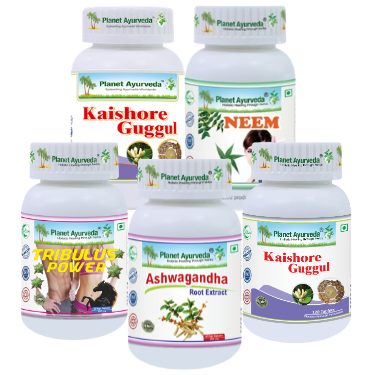
The specific protocol suggested for the management of Urethrovaginal Fistula includes:
- Kaishore Guggul
- Neem Capsules
- Ashwagandha Capsules
- Tribulus Power
- Boswellia Curcumin
Herbal Remedies for Urethrovaginal Fistula

PRODUCT DESCRIPTION
1. Kaishore Guggul
A classical herbal powder blend formulated with potent diuretic and renal-protective botanicals, including Punarnava (Boerhavia diffusa), Gokshura (Tribulus terrestris), Varun (Crataeva nurvala), and Shigru (Moringa oleifera). While traditionally utilized for urinary health, its deep-acting diuretic and anti-inflammatory properties help reduce abdominal fluid accumulation (ascites), alleviate tissue edema, and promote the clearance of metabolic wastes and toxic fluid collections from the peritoneal cavity.
Dosage: 2 tablets twice daily, with plain water after meals.
2. Neem Capsules
Formulated with standardized extracts of rejuvenative and detoxifying herbs designed to support internal fluid dynamics and cellular cleansing. Nephralka assists in regulating fluid balance, soothing irritated internal membranes, and supporting the body’s natural mechanisms for filtering metabolic byproducts, thereby reducing the toxic burden on deep visceral tissues.
Dosage: 2 capsules twice daily, with plain water after meals.
3. Ashwagandha Capsules
Prepared from the extracts of Pinus roxburghii (Chir Pine / Saral), this traditional preparation possesses strong Lekhana (scraping), antimicrobial, and deep tissue-cleansing properties. In conditions characterized by abnormal fibrous tissue deposition and encasement, Saral helps break down stubborn adhesions, stimulates microcirculation, and supports the reduction of dense, sclerotic tissue formations within the body.
Dosage: 1 capsule twice daily, with plain water after meals.
4. Tribulus Power
Containing equal proportions of three classical fruits—Amalaki (Emblica officinalis), Bibhitaki (Terminalia bellirica), and Haritaki (Terminalia chebula). Triphala is celebrated as the ultimate tridoshic balancer and gentle internal cleanser. It aids in deep detoxification (Ama pachana), promotes regular bowel motility without causing irritation, supports optimal gastrointestinal tract health, and enhances nutrient absorption during recovery.
Dosage: 1 capsule twice daily, with plain water after meals.
5. Boswellia Curcumin
A classic Ayurvedic herbal powder blend containing pungent and cooling herbs such as Trivrit (Operculina turpethum), Pippali (Piper longum), Maricha (Piper nigrum), Shunti (Zingiber officinale), and cloves. Avipattikar Churna is exceptionally effective in balancing gastric acidity, stimulating sluggish digestive fire (Agni), clearing obstruction in the gastrointestinal tract, and promoting mild, natural bowel cleansing to relieve abdominal bloating and discomfort.
Dosage: 1 capsule twice daily, with plain water after meals.
CONCLUSION
Urethrovaginal fistula is a complex urogenital condition that severely impacts physical comfort and emotional well-being. While conventional surgical intervention remains essential for anatomical correction, integrating traditional Ayurvedic principles offers a comprehensive, supportive dimension to patient care. By addressing underlying doshic imbalances, purging metabolic toxins (Ama), reducing local inflammation, and nourishing depleted tissues (Rasayana), targeted herbal protocols—such as Kaishore Guggul, Neem, Ashwagandha, Tribulus Power, and Boswellia Curcumin—help create an optimal internal environment for tissue regeneration, infection control, and long-term urogenital health.
