
 Email-Id :
  Contact Us : 0172-521-4040 (India), +91-172-521-4040 (Outside India)
Abstract
Estrogen is an indispensable hormone responsible for regulating the female reproductive system, bone density, and cardiovascular health. However, when the body’s natural estrogen pathways become overloaded or impaired, an imbalance known as estrogen dominance can occur. Chronic exposure to elevated levels of estrogen—specifically toxic metabolites produced during improper breakdown—is a major contributor to the development and progression of hormone-receptor-positive breast cancers. Estrogen detoxification refers to the biological processes by which the liver, gastrointestinal tract, and cellular pathways metabolise and eliminate surplus estrogen. Enhancing these biochemical clearance mechanisms through targeted nutrition, lifestyle interventions, and traditional medical systems like Ayurveda reduces cellular damage, controls tissue proliferation, and significantly lowers breast cancer risk.

Introduction
Breast cancer remains one of the most common malignancies affecting women worldwide. While genetic factors such as BRCA (BReast CAncer gene) mutations play a critical role, environmental exposures, lifestyle habits, and endocrine disruptors account for a substantial percentage of cases. Among the key hormonal drivers of breast tissue hyperplasia is human estrogen. In healthy physiological conditions, estrogen circulates, performs its biological signals, and is promptly broken down by hepatic enzymes before being excreted through urine and stool. Modern lifestyles—marked by chronic stress, nutrient-poor diets, alcohol consumption, high body fat composition, and constant contact with synthetic xenoestrogens—frequently overload these clearance pathways. When the rate of estrogen production and intake exceeds the body’s capacity to detoxify it, circulating levels spike, leading to tissue hyper-responsiveness. Under these conditions, specific downstream metabolites interact directly with DNA in breast cells, creating mutations that initiate oncogenesis. Understanding and supporting the biochemical and physiological pathways of estrogen detoxification is therefore a cornerstone of primary breast cancer prevention.
Understanding Estrogen and Its Role in Breast Health
Estrogen is a group of steroid hormones, including estradiol, estrone, and estriol. Estradiol is the predominant estrogen during the reproductive years. It is produced mainly by the ovaries before menopause, while after menopause, estrogen production occurs primarily through the conversion of androgens in peripheral tissues, including adipose tissue. Breast tissue contains estrogen receptors, particularly estrogen receptor alpha (ERα), which allow estrogen to influence cellular activity. When estrogen binds to these receptors, it can activate signals that promote cell growth and proliferation. This is a normal physiological process, but persistent stimulation can contribute to the development and progression of hormone-sensitive breast cancer. Estrogen exposure is influenced by several factors, including the age at which menstruation begins, age at menopause, pregnancy history, hormone replacement therapy, and body composition. The cumulative duration of exposure matters because breast cells may undergo repeated cycles of growth and division over many years. Research also indicates that estrogen may contribute to carcinogenesis through mechanisms beyond receptor stimulation. Certain estrogen metabolites can undergo oxidation and produce reactive intermediates capable of damaging DNA. This provides a biological rationale for studying estrogen metabolism in relation to breast cancer risk.
What Is Estrogen Detoxification?
Estrogen detoxification is the physiological process through which the body transforms and eliminates estrogen and its metabolites. It is not a single reaction but a series of metabolic steps involving the liver, blood, intestines, and kidneys. The process can be understood in three broad stages:
- Metabolism: Estrogen is chemically modified in the liver through enzyme-mediated reactions.
- Conjugation: The metabolites are attached to molecules such as glucuronic acid or sulfate, which generally makes them more water-soluble.
- Elimination: The modified compounds leave the body through urine or bile. Estrogen excreted in bile may reach the intestines, where bacterial enzymes can alter some conjugated metabolites and permit reabsorption.
This process is regulated by enzymes and depends on overall liver function, intestinal activity, and hormonal physiology. A healthy body does not need a special detoxification program to perform these functions. The scientific question is whether particular dietary or lifestyle interventions can meaningfully alter estrogen exposure or reduce cancer risk
How Estrogen Metabolism Relates to Breast Cancer
Estrogen may influence breast cancer development through two major pathways.
Estrogen receptor signalling
Estrogen binds to receptors in breast cells and activates gene expression involved in cellular growth. In hormone receptor-positive breast cancer, these signals can support tumour development or progression.
Oxidative and DNA-damaging pathways
Estrogen metabolism produces compounds that can undergo further oxidation. Some reactive metabolites may interact with DNA and form damage, while oxidative stress may affect cellular repair mechanisms. These processes are biologically plausible contributors to carcinogenesis, although the relationship between individual estrogen metabolites and a person’s actual breast cancer risk is complex.
How Healthy Estrogen Metabolism Supports Breast Wellness
Maintaining Hormonal Balance
The body requires estrogen for normal breast development and reproductive health. Balanced estrogen metabolism helps maintain appropriate hormone levels according to age and physiological needs. Hormonal balance is influenced by the interaction of estrogen with other hormones, including progesterone. Supporting overall endocrine health through nutritious food, adequate sleep, and regular physical activity can contribute to general well-being.
Supporting Liver Function
The liver is an important organ for hormone metabolism. Healthy liver function supports the processing of estrogen and many other substances in the body. A diet rich in vegetables, whole grains, fruits, and adequate protein provides nutrients required for normal liver function. Limiting excessive alcohol intake and maintaining a healthy body weight also supports liver wellness.
Promoting Healthy Digestion
Estrogen metabolites eliminated through bile pass into the digestive tract. Normal intestinal function contributes to the body’s elimination processes. Dietary fiber from vegetables, fruits, legumes, and whole grains supports bowel regularity and healthy digestion. Adequate water intake and regular physical activity further support digestive health.
Supporting Healthy Body Composition
Adipose tissue participates in estrogen production through the conversion of certain hormones into estrogen. Maintaining a healthy body composition is therefore relevant to hormonal wellness, particularly after menopause.
The Role of Body Fat and Insulin Resistance
After menopause, adipose tissue becomes an important source of estrogen production. Fat tissue contains aromatase, an enzyme that converts certain androgens into estrogens. Increased body fat may therefore increase estrogen exposure in some postmenopausal women. Obesity is also associated with insulin resistance, chronic low-grade inflammation, and altered growth-factor signalling. These changes may create a biological environment that supports abnormal cell growth. Gradual weight management may help reduce several breast cancer risk factors simultaneously. It should be approached through sustainable nutrition, physical activity, sleep, and metabolic care rather than extreme dieting.
Liver Health and Estrogen Processing
The liver is responsible for transforming many hormones, medicines, and metabolic compounds. Conditions such as fatty liver disease, excessive alcohol intake, and certain medication-related injuries may impair normal liver function. Supporting liver health includes:
- Maintaining a healthy body weight
- Eating a balanced diet
- Limiting alcohol
- Avoiding unnecessary supplements
- Managing diabetes and abnormal cholesterol
- Following medical advice for liver disease
- Staying physically active
A liver-supportive lifestyle may contribute to normal hormone metabolism, but it does not guarantee the prevention of breast cancer.
Lifestyle Measures That May Reduce Breast Cancer Risk
Regular Physical Activity
Physical activity is associated with a lower risk of breast cancer. Exercise may help through several mechanisms, including improved insulin sensitivity, reduced body fat, lower inflammation, and changes in hormone availability. A practical routine may include brisk walking, strength training, cycling, swimming, or other activities performed consistently according to individual ability.
Limiting Alcohol
Alcohol consumption is a recognised breast cancer risk factor. It may influence estrogen levels and other biological pathways involved in carcinogenesis. Reducing alcohol intake or avoiding it altogether may lower risk.
Maintaining a Healthy Weight
Healthy body composition is particularly relevant after menopause, when adipose tissue contributes more substantially to estrogen production. Weight management should focus on gradual, sustainable changes rather than rapid weight loss.
Breastfeeding When Possible
Breastfeeding is associated with a reduction in breast cancer risk. The protective relationship may involve changes in breast tissue differentiation, hormonal exposure, and the number of menstrual cycles over a lifetime.
Avoiding Unnecessary Hormonal Exposure
Menopausal hormone therapy may provide important symptom relief for some individuals, but its benefits and risks vary according to the type of therapy, duration, age, and medical history.
Ayurvedic Insight
Ayurveda provides a traditional framework for understanding metabolism, tissue nourishment, elimination, and physiological equilibrium. Classical Ayurvedic texts do not describe estrogen using modern chemical terminology, but some traditional concepts may be used to discuss reproductive and metabolic health.
The Role of Agni and Ama
In Ayurveda, efficient tissue health (Dhatu Agni) relies entirely on strong central digestion (Jatharagni). When Agni (Digestive Fire) is weak, food and metabolic byproducts are incompletely processed, leading to the formation of Ama—a sticky, toxic, morbid substance that circulates throughout the bodily channels (Srotas).
In the context of modern pathology, toxic estrogen metabolites (such as 4-hydroxyestrone and quinones) represent a molecular form of Ama circulating within Rasa (plasma) and Rakta (blood) dhatus. Accumulations of Ama block Artava Vaha Srotas (the channels regulating female reproductive health and hormonal tissue), establishing a breeding ground for tissue hyper-growth, cysts, and tumours (Granthi and Arbuda).
Dosha Imbalances in Estrogen Dominance
Estrogen dominance typically exhibits a dual imbalance of Kapha and Pitta:
- Excess Kapha manifests as cellular proliferation, tissue congestion, fluid retention, weight gain, and slow, sluggish elimination. Kapha’s heavy, slow qualities impair the natural clearance pathways.
- Excess Pitta reflects inflammatory conditions, heat, liver congestion, and altered blood metabolism. Since the liver (Yakrit) is a primary seat of Pitta, a congested, overheated Pitta state impairs the liver’s ability to process blood-borne toxins, directly hindering modern Phase I and Phase II clearance.
Herbal Remedies for Estrogen Detox by Planet Ayurveda
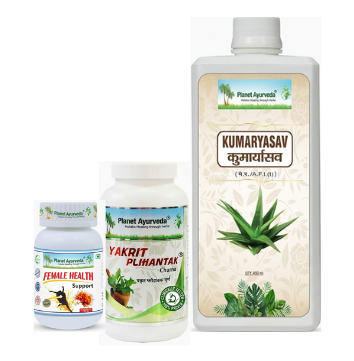
Planet Ayurveda offers a wide range of herbal medicines and wellness products prepared according to traditional Ayurvedic principles. The formulations contain carefully selected herbs and natural ingredients to support different aspects of health and well-being. The product range includes medicines for digestion, immunity, respiratory health, joint care, liver support, skin health, and general vitality. Each formulation is developed with attention to ingredient quality, traditional knowledge, and everyday healthcare needs. Planet Ayurveda focuses on providing herbal solutions that are convenient, affordable, and easy to include in a wellness routine. The medicines are intended to support the body’s natural functions and promote balanced health. With its commitment to authentic Ayurvedic care, Planet Ayurveda aims to bring herbal healthcare closer to people worldwide. Here, we will discuss some formulations for estrogen detox that will further help in preventing breast cancer. Let’s start!
- Yakrit Plihantak Churna
- Female Health Support Capsules
- Kumaryasav
Herbal Remedies for Breast Cancer

Product Description
Yakrit Plihantak Churna
Yakrit Plihantak Churna contains Bhumyamalaki (Phyllanthus niruri), Kalmegh (Andrographis paniculata), Bhringraj (Eclipta alba), Sharpunkha (Tephrosia purpurea), Kaasni (Cichorium intybus), Katuki (Picrorhiza kurroa), Makoy (Solanum indicum), and Punarnava (Boerhavia diffusa). These herbs are traditionally used to support Yakrit (liver function) and healthy metabolic activity. The liver plays an important role in the transformation and elimination of estrogen metabolites. Bhumyamalaki, Kalmegh, and Katuki provide bitter herbal support for digestion and hepatobiliary function. Bhringraj, Makoy, and Punarnava are traditionally valued for their antioxidant and liver-supportive properties. Kaasni and Sharpunkha further support digestive balance and normal metabolic processes. Together, these herbs may help maintain efficient liver function and support the body’s natural hormonal balance.
Dosage: 1 tsp twice daily with warm water after a meal.
Female Health Support Capsules
Female Health Support Capsules contain Ashoka (Saraca indica), Lodhra (Symplocos racemosa), and Shatavari (Asparagus racemosus), traditionally used to support female reproductive health. Ashoka and Lodhra help maintain healthy menstrual function and support the normal condition of uterine tissues. Shatavari provides nourishment for female physiology and contains steroidal saponins involved in reproductive wellness. These herbs support balanced hormonal activity and healthy reproductive-tissue function. Their antioxidant properties help protect cells against oxidative stress and free-radical damage. Healthy menstrual function and tissue nourishment are important aspects of maintaining estrogen balance. The formulation supports the body’s overall hormonal wellness, including the normal processing of estrogen through the liver and other elimination pathways. By supporting reproductive health and cellular protection, these herbs contribute to a holistic approach to breast health.
Dosage: 1 capsule twice daily with plain water after a meal.
Kumaryasav
Kumaryasava contains Kumari (Aloe barbadensis), Sonth (Zingiber officinale), Pippali (Piper longum), Kali Maricha (Piper nigrum), and Lोह Bhasma (iron calx), along with other traditional ingredients. Kumari supports liver and digestive function, which are important for the normal metabolism and elimination of estrogen metabolites. Sonth, Pippali, and Kali Maricha support Agni (digestive fire) and improve the processing of nutrients and herbal constituents. These herbs also promote healthy gastrointestinal movement, supporting the elimination of waste through the bowel. Aloe vera and the pungent herbs provide antioxidant support that helps protect cells from oxidative stress. In Ayurvedic terms, Kumaryasava supports Yakrit (liver), Agni (metabolism), and Malashodhana (proper bowel elimination). This supports the body’s natural hormonal balance and the normal processing of estrogen.
Dosage: 10 ml twice daily with plain water after a meal.
Conclusion
Estrogen metabolism is an important biological process that may influence breast cancer risk, particularly in hormone-sensitive breast cancers. The liver modifies estrogen, while the intestines and kidneys participate in its elimination. Differences in estrogen metabolites may be associated with cancer risk, but no detoxification diet, herb, or supplement has been established as a reliable method of preventing breast cancer. A balanced diet, regular exercise, healthy body composition, limited alcohol intake, adequate sleep, and appropriate medical care can support overall hormonal and metabolic health. Ayurveda offers traditional concepts such as Agni (metabolic fire), Artava (reproductive function), and Dosha balance to understand these processes holistically.