
 Email-Id :
  Contact Us : 0172-521-4040 (India), +91-172-521-4040 (Outside India)
ABSTRACT
Encapsulating peritoneal sclerosis (EPS), sometimes referred to colloquially as “abdominal cocoon syndrome,” is a rare, severe, and potentially life-threatening condition characterized by a thick, fibrocollagenous membrane enveloping the small intestine and viscera. This progressive encasement leads to recurrent or complete intestinal obstruction, abdominal pain, malnutrition, and significant morbidity. While long-term peritoneal dialysis, prior abdominal surgeries, and chronic peritoneal inflammation are primary triggers, etiopathogenesis remains complex and challenging to manage through conventional interventions alone, which often alternate between conservative nutritional support and high-risk surgical adhesiolysis or enterolysis.
In Ayurveda, deep-seated fibrotic disorders involving structural encapsulation, chronic localized obstruction, and visceral congestion are interpreted through the lens of severe Kapha and Vata dosha aggravation, coupled with deep metabolic impairment (Agnimandya), accumulation of deep-seated toxins (Ama), and progressive vitiation of the tissue channels (Srotorodha). Modern medical management emphasizes nutritional optimization, anti-inflammatory pharmacotherapy (such as tamoxifen or corticosteroids), and careful surgical lysis when indicated. Complementary Ayurvedic protocols aim to dissolve fibrous tissue adhesions (Lekhana), correct metabolic fire, clear lymphatic and channel blockages (Srotoshodhana), and pacify aggravated Vata-Kapha doshas. This article explores the comprehensive causes, clinical manifestations, diagnostic criteria, conventional management strategies, and the targeted Ayurvedic perspective of Encapsulating Peritoneal Sclerosis utilizing specialized herbal formulations including Mutrakrichantak Churna, Nephralka Capsules, Saral Ghan Vati, Triphala Capsules, and Avipattikar Churna
INTRODUCTION
Encapsulating peritoneal sclerosis is classified among the most challenging complications of peritoneal biology, most notably associated with long-term peritoneal dialysis (PD), though idiopathic forms (abdominal cocoon syndrome) also occur in adolescent or adult populations without a history of dialysis. The condition is defined by the formation of a dense, fibrous collagenous cocoon-like membrane that wraps around loops of the small intestine, restricting normal peristalsis and resulting in mechanical bowel obstruction.
The pathogenesis involves a multi-stage inflammatory and profibrotic cascade. Initial peritoneal injury—whether from bioincompatible dialysis solutions, recurrent peritonitis, chemical irritation, or surgery—triggers a chronic inflammatory response. Mesothelial cells undergo epithelial-to-mesenchymal transition (EMT), transforming into profibrotic fibroblasts that lay down extensive extracellular matrices and collagen. This continuous fibrogenesis creates a thick fibrous membrane that chokes the bowel, leading to failure to thrive, severe protein-energy malnutrition, recurrent nausea, vomiting, and bowel ischemia. Because conventional treatments carry high recurrence and surgical complication rates, exploring integrative, antifibrotic, and metabolic-cleansing strategies is of paramount clinical interest.
CAUSES
The etiology of Encapsulating Peritoneal Sclerosis is categorized into secondary forms (most common) and idiopathic primary forms:
- Long-Term Peritoneal Dialysis (Secondary EPS): The duration of peritoneal dialysis is the single strongest risk factor. Exposure to bioincompatible dialysates (high glucose concentration, lactate buffers, advanced glycation end-products) causes cumulative peritoneal damage.
- Recurrent Peritonitis Episodes: Severe or repeated bacterial and fungal peritonitis accelerates peritoneal membrane fibrosis and structural remodeling.
- Prior Abdominal Surgeries and Trauma: Past surgical procedures, intraperitoneal hemorrhage, or trauma can provoke localized or generalized fibrous reactions.
- Drug-Induced Triggers: Certain intraperitoneal antiseptics, beta-blockers (such as practolol, historically), and chronic use of mineral oils have been implicated in inducing sclerosing peritonitis.
- Idiopathic (Abdominal Cocoon Syndrome): Occurring predominantly in young adolescent females from tropical or subtropical regions, this form may be related to congenital developmental anomalies of the peritoneum or sub-clinical retrograde peritonitis.
- Autoimmune and Systemic Conditions: Systemic lupus erythematosus, sarcoidosis, and chronic intraperitoneal inflammation associated with malignancies can precipitate fibrotic encapsulation.
SIGNS AND SYMPTOMS
The clinical presentation of EPS typically mirrors subacute or chronic intestinal obstruction, often evolving insidiously:
- Recurrent Abdominal Pain and Cramping: Diffuse, colicky abdominal discomfort exacerbated by eating, resulting from impaired peristalsis and bowel stretching against the rigid cocoon.
- Gastrointestinal Dysfunction: Persistent nausea, recurrent vomiting, early satiety, anorexia, and alternating episodes of constipation or diarrhea.
- Palpable Abdominal Mass: In advanced cases, a distinct, firm, irregular abdominal mass or encapsulated fullness may be palpated upon physical examination.
- Severe Malnutrition and Weight Loss: Profound cachexia, muscle wasting, and hypoalbuminemia due to chronic malabsorption, protein-losing enteropathy, and fear of eating (sitophobia).
- Features of Intestinal Obstruction: Episodes of acute-on-chronic complete bowel obstruction characterized by abdominal distension, absence of flatus, and visible peristalsis.
INVESTIGATIONS
Diagnosing Encapsulating Peritoneal Sclerosis requires a high index of suspicion, combining clinical history with advanced imaging and diagnostic modalities:
- Contrast-Enhanced Computed Tomography (CT) Scan: The gold standard imaging modality. CT findings include peritoneal thickening, peritoneal calcification, loculated fluid collections, bowel wall thickening, tethering and conglomeration of small bowel loops encased in a membrane, and signs of mechanical obstruction.
- Plain Abdominal Radiographs: May reveal signs of small bowel obstruction, multiple air-fluid levels, or characteristic intraperitoneal linear calcifications.
- Diagnostic Laparoscopy or Exploratory Laparotomy: Direct visualization of the thick, fibrous cocoon encasing the intestine provides definitive diagnosis when imaging is inconclusive, though invasive.
- Laboratory Blood Panels: Complete blood counts (assessing for anemia of chronic disease), serum albumin and total protein (evaluating malnutrition), inflammatory markers (CRP, ESR), and renal function tests to monitor baseline systemic status.
MANAGEMENT
Management of EPS requires a multidisciplinary approach balancing nutritional rehabilitation, medical antifibrotic therapy, and surgical intervention:
- Nutritional Support: Initiation of total parenteral nutrition (TPN) to rest the bowel, correct severe malnutrition, and improve metabolic status before any intervention.
- Medical and Pharmacological Therapy: Discontinuation of peritoneal dialysis and transition to hemodialysis. Use of immunosuppressants (corticosteroids) and antifibrotic agents (such as tamoxifen) to inhibit fibroblast proliferation and collagen deposition during early or mild inflammatory phases.
- Surgical Intervention: Enterolysis and surgical peeling or resection of the thick peritoneal membrane to free the incarcerated bowel loops. Surgery is technically demanding and reserved for patients with clear mechanical obstruction refractory to conservative care.
- Supportive Care: Management of fluid and electrolyte imbalances, pain control, and prevention of catheter-related sepsis.
AYURVEDIC VIEW AND MANAGEMENT
In Ayurveda, Encapsulating Peritoneal Sclerosis can be conceptualized through the profound vitiation of Kapha and Vata doshas acting upon Mamsa, Meda, and Rakta Dhatu within the abdominal cavity (Koshtha). The pathological process aligns with severe Srotorodha (channel obstruction), Granthi or Arbuda formation (abnormal growths and fibrous encapsulation), and deep metabolic stagnation (Agnimandya).
When Vata is deranged, it drives abnormal tissue drying, erratic movement, and colicky pain, while vitiated Kapha contributes heaviness, coldness, dense mucous secretions, and excessive fibrocollagenous deposition. The accumulation of toxic metabolic byproducts (Ama) combined with stagnant tissue fluids creates a rigid, localized barrier. Ayurvedic management strategy focuses on Lekhana (scraping and reducing excessive fibrous tissues), Srotoshodhana (clearing and opening blocked microchannels), Deepana-Pachana (igniting digestive fire and digesting toxins), and Vatashamana (pacifying Vata to relieve spasms and pain).
AYURVEDIC FORMULATIONS FOR INTERNAL CLEANSING AND FIBROSIS MANAGEMENT
Planet Ayurveda provides authentic, high-quality herbal formulations crafted in GMP-certified facilities using standardized extracts. Free from synthetic additives, chemicals, and heavy metals, these products support holistic healing and metabolic recovery.
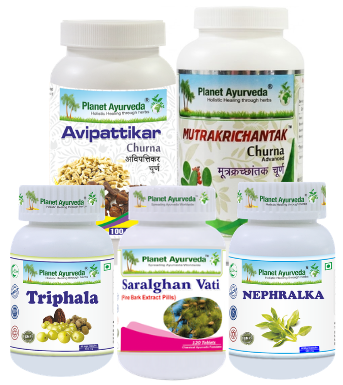
The specific protocol suggested for the management of Encapsulating Peritoneal Sclerosis includes:
- Mutrakrichantak Churna
- Nephralka Capsules
- Saral Ghan Vati
- Triphala Capsules
- Avipattikar Churna
Herbal Remedies For Encapsulating Peritoneal Sclerosis

PRODUCT DESCRIPTION
1. Mutrakrichantak Churna
A classical herbal powder blend formulated with potent diuretic and renal-protective botanicals, including Punarnava (Boerhavia diffusa), Gokshura (Tribulus terrestris), Varun (Crataeva nurvala), and Shigru (Moringa oleifera). While traditionally utilized for urinary health, its deep-acting diuretic and anti-inflammatory properties help reduce abdominal fluid accumulation (ascites), alleviate tissue edema, and promote the clearance of metabolic wastes and toxic fluid collections from the peritoneal cavity.
Dosage: 1 teaspoon twice daily, with plain water after meals.
2. Nephralka Capsules
Formulated with standardized extracts of rejuvenative and detoxifying herbs designed to support internal fluid dynamics and cellular cleansing. Nephralka assists in regulating fluid balance, soothing irritated internal membranes, and supporting the body’s natural mechanisms for filtering metabolic byproducts, thereby reducing the toxic burden on deep visceral tissues.
Dosage: 1 capsule twice daily, with plain water after meals.
3. Saral Ghan Vati
Prepared from the extracts of Pinus roxburghii (Chir Pine / Saral), this traditional preparation possesses strong Lekhana (scraping), antimicrobial, and deep tissue-cleansing properties. In conditions characterized by abnormal fibrous tissue deposition and encasement, Saral helps break down stubborn adhesions, stimulates microcirculation, and supports the reduction of dense, sclerotic tissue formations within the body.
Dosage: 2 tablets twice daily, with plain water after meals.
4. Triphala Capsules
Containing equal proportions of three classical fruits—Amalaki (Emblica officinalis), Bibhitaki (Terminalia bellirica), and Haritaki (Terminalia chebula). Triphala is celebrated as the ultimate tridoshic balancer and gentle internal cleanser. It aids in deep detoxification (Ama pachana), promotes regular bowel motility without causing irritation, supports optimal gastrointestinal tract health, and enhances nutrient absorption during recovery.
Dosage: 1 capsule twice daily, with plain water after meals.
5. Avipattikar Churna
A classic Ayurvedic herbal powder blend containing pungent and cooling herbs such as Trivrit (Operculina turpethum), Pippali (Piper longum), Maricha (Piper nigrum), Shunti (Zingiber officinale), and cloves. Avipattikar Churna is exceptionally effective in balancing gastric acidity, stimulating sluggish digestive fire (Agni), clearing obstruction in the gastrointestinal tract, and promoting mild, natural bowel cleansing to relieve abdominal bloating and discomfort.
Dosage: 1/2 teaspoon twice daily, with warm water after meals.
CONCLUSION
Encapsulating peritoneal sclerosis is an intricate and formidable medical challenge characterized by dense fibrocollagenous encasement of the bowel, leading to chronic obstruction and malnutrition. While conventional management relies heavily on nutritional rehabilitation, immunosuppression, and complex surgical adhesiolysis, integrative paradigms offer valuable supportive dimensions. By addressing the deep-seated root causes of Kapha-Vata imbalance, mitigating excessive fibrous proliferation through Lekhana actions, enhancing metabolic fire (Agni), and gently clearing channel obstructions (Srotoshodhana), specialized Ayurvedic protocols—featuring Mutrakrichantak Churna, Nephralka Capsules, Saral Ghan Vati, Triphala Capsules, and Avipattikar Churna—provide a comprehensive framework to support internal healing, improve gastrointestinal comfort, and enhance long-term vitality.
