
 Email-Id :
  Contact Us : 0172-521-4040 (India), +91-172-521-4040 (Outside India)
ABSTRACT
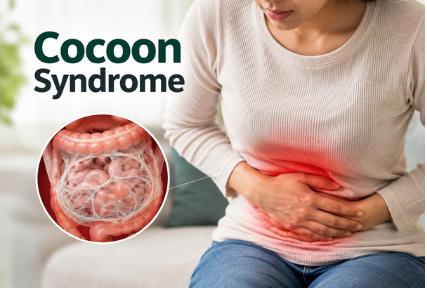
Cocoon Syndrome, also known clinically as abdominal cocoon, is a rare and unusual condition characterized by the partial or complete encasement of the small intestine within a dense, fibrous, collagenous membrane resembling a cocoon. This mechanical entrapment frequently leads to acute or chronic intestinal obstruction, recurrent abdominal pain, nausea, vomiting, and malnutrition. While conventional management often relies on exploratory laparotomy and surgical membranectomy, patients frequently seek complementary and holistic approaches to reduce systemic inflammation, prevent tissue fibrosis, and enhance gastrointestinal motility.
In Ayurveda, structural entrapments and motility disorders of the abdomen are interpreted through the lens of Annavaha Srotas (gastrointestinal system) dysfunction, involving the severe aggravation of Vata and Kapha doshas, deep-seated metabolic impurities (Ama), and localized tissue hardening or obstruction (Sanga). Ayurvedic management focuses on Vata-Kapha pacifying therapies (Samshodhana and Samshamana), deep tissue detoxification, and formulations that promote carminative action (Deepana-Pachana), relieve bowel congestion, and restore normal downward movement of energy (Anulomana). This article explores the comprehensive causes, clinical manifestations, diagnostic approaches, conventional interventions, and the targeted Ayurvedic management of cocoon syndrome using specific herbal formulations
INTRODUCTION
Cocoon Syndrome represents a challenging clinical entity within gastroenterology and surgery, characterized by a fibro-collagenous sac enveloping loops of the small intestine. This anatomical encasement restricts normal peristalsis and can cause recurrent episodes of subacute or complete intestinal obstruction. Patients often present with colicky abdominal pain, recurrent vomiting, weight loss, and a palpable abdominal mass.
The pathogenesis of cocoon syndrome is often categorized as primary (idiopathic, frequently observed in adolescent females residing in tropical or subtropical regions) or secondary (linked to continuous ambulatory peritoneal dialysis, beta-blocker therapy, peritoneal ventriculoperitoneal shunts, or abdominal tuberculosis). While surgical adhesiolysis and membranectomy remain the cornerstone of conventional treatment, high rates of postoperative recurrence or persistent dysmotility necessitate supportive and corrective medical care.
Integrating Ayurvedic principles into the care continuum offers a holistic perspective aimed at clearing metabolic toxins, melting deep-seated fibrous accumulations, regulating digestive fire (Agni), and restoring normal intestinal transit.
CAUSES
The etiology of cocoon syndrome spans idiopathic, environmental, iatrogenic, and infectious factors:
- Primary (Idiopathic) Factors: Often seen in young adolescent girls in tropical climates, potentially linked to retrograde menstruation or subclinical viral peritonitis.
- Secondary Causes: Associated with long-term peritoneal dialysis, abdominal tuberculosis, sarcoidosis, or gynecological conditions.
- Pharmaceutical Agents: Prolonged usage of specific medications like practolol has historically been documented to induce sclerosing peritonitis.
- Chronic Abdominal Inflammation: Persistent low-grade inflammation of the peritoneum leading to excessive collagen deposition and membrane formation.
SIGNS AND SYMPTOMS
The clinical presentation of cocoon syndrome is often intermittent or acute depending on the degree of bowel strangulation:
- Recurrent Colicky Abdominal Pain: Cramping pain resulting from obstructed peristalsis within the fibrous sac.
- Abdominal Distension and Nausea: Noticeable bloating and frequent postprandial nausea due to delayed gastric emptying and transit.
- Palpable Abdominal Mass: A soft, non-tender tumor-like mass felt during physical examination, representing the encapsulated bowel loops.
- Malnutrition and Weight Loss: Chronic malabsorption and fear of eating due to post-meal pain leading to significant nutritional deficiency.
- Vomiting: Bilious or non-bilious vomiting occurring during acute exacerbations of intestinal obstruction.
INVESTIGATIONS
Accurate anatomical visualization and exclusion of other causes of bowel obstruction are vital:
- Plain Abdominal Radiography: May reveal clustered small bowel loops, dilated air-fluid levels, or calcifications within the sac.
- Contrast-Enhanced Computed Tomography (CECT): Considered the gold standard imaging modality, demonstrating a “cauliflower-like” clustering of small bowel loops enclosed within a thick, enhancing peritoneal membrane.
- Barium Studies: Upper gastrointestinal series with small bowel follow-through showing delayed transit and fixed, huddled bowel loops.
- Diagnostic Laparoscopy or Laparotomy: Direct visualization of the dense fibro-collagenous membrane encasing the intestine, confirming the final diagnosis.
MANAGEMENT
Conventional management of cocoon syndrome primarily involves surgical intervention for symptomatic or obstructed cases.
- Conservative Measures: Bowel rest, nasogastric decompression, total parenteral nutrition (TPN), and close monitoring for acute ischemic changes in mild or early presentations.
- Surgical Intervention: Open exploratory laparotomy with careful peeling and excision of the thick encapsulating membrane (membranectomy) along with extensive lysis of adhesions to free the entrapped small bowel loops.
- Supportive Medical Care: Postoperative management focusing on gut rehabilitation, anti-inflammatory support, and herbal protocols to restore regular bowel habits and prevent recurrence.
AYURVEDIC FORMULATIONS FOR GASTROINTESTINAL HEALTH
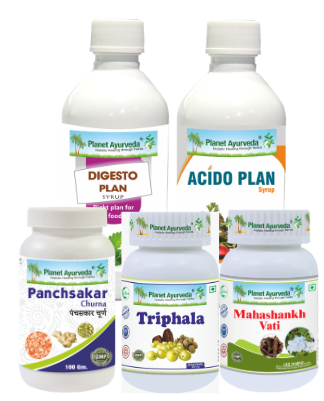
Planet Ayurveda provides authentic, high-quality herbal formulations crafted in GMP-certified facilities using standardized extracts. Free from synthetic additives, chemicals, and heavy metals, these products support holistic digestive recovery and metabolic balance.
The specific protocol suggested for the management of Cocoon Syndrome includes:
- Triphala capsules
- Panchsakar churna
- Syrup Digestoplan
- Syrup Acidoplan
- Mahashankh vati
Herbal Remedies of Cocoon Syndrome

PRODUCT DESCRIPTION
1. Triphala Capsules
Formulated with a balanced blend of three classical fruits: Terminalia chebula (Haritaki), Terminalia bellirica (Bibhitaki), and Emblica officinalis (Amalaki). Triphala is a legendary Ayurvedic rasayana renowned for gentle internal cleansing, detoxification, and regulation of bowel movements. It helps clear accumulated toxins (Ama) from the gastrointestinal tract, supports healthy mucosal lining, and promotes regular peristalsis without causing dependency.
Dosage: 1 capsule twice daily, with plain water after meals.
2. Panchsakar Churna
A traditional herbal powder combining five potent ingredients: Senna, Salt of Haritaki, Shunti (Ginger), Sauvatchal Lavana (Black Salt), and Trivrit. Panchsakar Churna is exceptionally effective in clearing bowel congestion, relieving abdominal heaviness, and maintaining proper digestive elimination. It acts as a natural carminative that alleviates gas, bloating, and sluggish bowel transit.
Dosage: 1/2 teaspoon twice daily, with warm water.
3. Syrup Digestoplan
A comprehensive herbal syrup designed to strengthen digestion and improve nutrient assimilation. It stimulates the secretion of digestive enzymes, balances gastric acid production, and relieves post-meal discomfort, nausea, and abdominal distension associated with compromised gut motility.
Dosage: 2 teaspoons twice daily, after meals.
4. Syrup Acidoplan
Formulated to soothe the gastrointestinal tract and balance Pitta and Vata doshas in the upper digestive tract. Syrup Acidoplan helps reduce burning sensations, acidity, and irritation in the stomach lining, providing a calming environment for sensitive digestive tissues undergoing rehabilitation.
Dosage: 2 teaspoons twice daily, after meals.
5. Mahashankh Vati
A classic mineral-herbal Ayurvedic tablet containing potent digestive and carminative substances like Shankh Bhashma, Danti, Pippali, and various salts. Mahashankh Vati is highly regarded for managing chronic indigestion, abdominal colic, gas accumulation, and sluggish metabolism. It enkindles digestive fire (Agni) and helps dissolve deep-seated metabolic obstructions.
Dosage: 2 tablets twice daily to be chewed 20 minutes before meals.
CONCLUSION
Cocoon Syndrome is a rare and complex gastrointestinal condition characterized by small bowel encasement and obstruction, significantly impacting a patient’s nutritional status and quality of life. While conventional surgery is often required for mechanical release, integrating traditional Ayurvedic principles offers a valuable supportive approach for long-term gut rehabilitation. By addressing underlying doshic imbalances, clearing metabolic toxins (Ama), reducing fibrous tissue accumulation, and enhancing digestive fire through targeted herbal protocols—such as Triphala capsules, Panchsakar churna, Syrup Digestoplan, Syrup Acidoplan, and Mahashankh vati—patients can achieve better digestive health, improved motility, and enhanced overall well-being.
