
 Email-Id :
  Contact Us : 0172-521-4040 (India), +91-172-521-4040 (Outside India)
ABSTRACT
Stevens-Johnson Syndrome (SJS) is a rare but potentially life-threatening mucocutaneous disorder that requires prompt recognition, appropriate evaluation, and comprehensive medical management. It represents a significant clinical challenge because of its acute progression and the possibility of serious complications. Particular attention is given to the importance of early intervention and coordinated supportive care to improve patient outcomes. From an Ayurvedic perspective, SJS can be discussed through the broader concepts of Pitta Dushti, Rakta Dushti, Agni disturbance, and involvement of Twak and Rakta Dhatu.
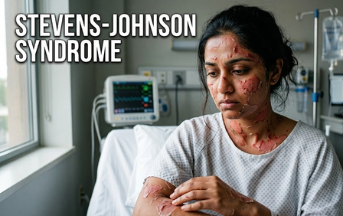
STATISTICS FOR STEVEN JOHNSON SYNDROME
- Approximately 1–5.76 cases per million people per year.
- May occur at any age; higher rates are reported in children and older adults.
- Epidermal detachment involves <10% of total body surface area (TBSA).
- SJS mortality: Approximately 5.4% in isolated SJS.
- SJS–TEN overlap: Involves 10–30% TBSA, with mortality around 14.4%.
- TEN: Involves >30% TBSA, with reported mortality of approximately 15.3–50%.
INTERESTING FACTS ABOUT STEVEN JOHNSON SYNDROME
Rare, but memorable
SJS is estimated to affect only a few people per million each year, making it an uncommon disorder.
A medical spectrum
SJS, SJS-TEN overlap, and TEN are regarded as different points along the same disease spectrum.
The 10% rule
The boundary between SJS and SJS-TEN overlap is defined using a surprisingly precise measurement—10% of total body surface area.
A global condition
SJS occurs worldwide, but its frequency and associated risks can vary between populations.
One name, many consequences
Despite being classified as a dermatological disorder, SJS can have implications extending far beyond the skin.
Recovery can be a long journey
The acute episode may resolve, but some individuals require prolonged follow-up and rehabilitation.
lesson in pharmacogenomics
SJS demonstrates how genetic makeup can interact with drug exposure, an important concept in personalized medicine.
The name has a history
The syndrome was first described in 1922 by pediatricians Albert Mason Stevens and Frank Chambliss Johnson.
INTRODUCTION
Stevens-Johnson Syndrome (SJS) is a rare and potentially life-threatening mucocutaneous disorder characterized by extensive epithelial injury and a complex systemic inflammatory response. It is considered part of the same clinical spectrum as toxic epidermal necrolysis (TEN), with the distinction between these entities primarily based on the extent of epidermal detachment. The disorder represents a significant diagnostic and therapeutic challenge because its presentation can evolve rapidly and may involve multiple organ systems. SJS also represents an important area of study in modern medicine because it illustrates the interaction between individual susceptibility, immune-mediated tissue injury, and environmental or therapeutic exposures. Advances in pharmacogenomics have further demonstrated that genetic variation may influence susceptibility in particular populations.
CAUSES AND RISK FACTORS OF STEVEN JOHNSON SYNDROME
The causative relationship is often complex and may involve an interaction between the triggering agent, immune response, and genetic background. These include:
Medication-Related Causes
- Antibiotics: Particularly sulfonamide antibiotics such as trimethoprim-sulfamethoxazole; other implicated groups include penicillins, cephalosporins, fluoroquinolones, and tetracyclines.
- Antiepileptic medicines: Carbamazepine, phenytoin, lamotrigine, phenobarbital, and related agents are important recognized triggers.
- Allopurinol: A well-established high-risk medicine, particularly in genetically susceptible individuals.
- NSAIDs: Especially the oxicam group, including meloxicam and piroxicam, has been associated with SJS/TEN.
- Antiretroviral medicines: Nevirapine and certain other antiretroviral agents have been implicated.
- Other medicines: Immune checkpoint inhibitors and several less frequently implicated drugs have also been reported.
Infectious Triggers
- Infections can occasionally be associated with SJS, particularly when no responsible medication is identified.
- Mycoplasma pneumoniae is an important infectious association, particularly in younger patients.
- Viral infections, including certain herpesviruses and hepatitis viruses, have also been reported.
- The precise contribution of infection can be difficult to establish because medications are often administered during infectious illnesses.
Genetic Susceptibility
- HLA (human leukocyte antigen) variation is an important determinant of susceptibility to drug-associated SJS/TEN.
- HLA-B*15:02 is strongly associated with carbamazepine-related SJS/TEN in several Asian populations, including specific Indian populations.
- HLA-B*58:01 is associated with increased susceptibility to allopurinol-induced SJS/TEN.
- HLA-A*31:01 has been associated with carbamazepine-related reactions in several populations.
- These associations are drug- and population-specific, rather than indicating a universal genetic risk.
Immunological and Host Factors
- SJS/TEN represents a T-cell-mediated delayed hypersensitivity reaction.
- An altered immune state may increase susceptibility to severe cutaneous adverse reactions.
- Individuals with HIV infection have a substantially increased risk compared with the general population.
- Malignancy, autoimmune disorders, and other states of immune dysfunction have also been reported as associated factors.
Other Recognized Risk Factors
- Previous exposure to a culprit medicine may be relevant, particularly when re-exposure occurs.
- Multiple concomitant medicines can make identification of the responsible agent difficult.
- Kidney or liver dysfunction may be associated with increased vulnerability in some patients and can influence drug handling.
- Certain age groups, particularly young children and older adults, have been reported to have increased risk in epidemiological studies.
CLINICAL FEATURES OF STEVEN JOHNSON SYNDROME
It is characterized by an acute, rapidly evolving mucocutaneous illness. Its clinical picture may vary between patients, but several characteristic findings help distinguish it from other severe cutaneous disorders. These include:
Acute Onset
The condition generally develops abruptly, with rapid progression over a short period. A preceding period of systemic illness may occur before prominent mucocutaneous manifestations become evident.
Prodromal Illness
Patients may initially develop fever, malaise, fatigue, and generalized discomfort. Headache, arthralgia, or other nonspecific constitutional complaints may accompany the early phase.
Skin Lesions
Cutaneous involvement commonly begins with erythematous or dusky macules. Lesions may develop an atypical targetoid or concentric appearance. The lesions can become confluent as the disease progresses. Atypical target lesions are particularly characteristic of SJS.
Epidermal Detachment
Progressive injury to the epidermis can result in flaccid blister formation and epidermal separation. Gentle mechanical pressure may cause superficial epidermal sloughing, a phenomenon known as positive Nikolsky sign. In SJS, epidermal detachment typically involves less than 10% of total body surface area.
Ocular Features
Findings can include conjunctivitis, ocular surface epithelial defects, and corneal involvement. Severe ocular disease may subsequently result in scarring, dry eye, visual impairment, or other chronic complications.
Systemic Involvement
SJS is not restricted to the skin and mucous membranes. Systemic involvement may include the respiratory, gastrointestinal, renal, hepatic, and hematological systems.
Genitourinary Manifestations
Urogenital mucosal involvement may lead to painful urination and difficulty passing urine.
DIAGNOSIS OF STEVEN JOHNSON SYNDROME
The diagnosis is primarily based on clinical assessment, supported by a detailed history, physical examination, and appropriate investigations. Since no single laboratory test can definitively establish SJS, careful evaluation of the temporal relationship with potential triggers, characteristic mucocutaneous findings, and the extent of epidermal involvement is essential.
Detailed medication history
SJS is primarily diagnosed from the clinical history and characteristic mucocutaneous findings. Review all recently started, stopped, or dose-adjusted medicines, particularly those taken during the preceding several weeks.
Physical examination
Assess the skin, oral cavity, eyes, genital region, and other mucosal surfaces systematically.
Extent of epidermal detachment
Estimate the percentage of total body surface area (TBSA) showing epidermal detachment. SJS generally involves <10% TBSA.
Skin biopsy
A punch or incisional biopsy from an appropriate lesion can support the diagnosis and help distinguish SJS/TEN from other blistering disorders. Typical findings include epidermal necrosis with separation of the epidermis from the underlying dermis and relatively limited inflammation.
Laboratory evaluation
Complete blood count, serum electrolytes, renal and liver function tests, glucose, and other investigations help assess systemic involvement and disease severity.
Multidisciplinary evaluation
Severe cases benefit from coordinated assessment involving dermatology, ophthalmology, critical care, internal medicine, and other relevant specialties.
MANAGEMENT OF STEVEN JOHNSON SYNDROME
It requires prompt recognition, immediate clinical assessment, and coordinated supportive care because of its potentially rapid and severe course. The management approaches include:
Immediate Withdrawal of the Suspected Trigger
Identify and promptly discontinue the suspected causative medicine. Non-essential medicines should also be reviewed and stopped when clinically appropriate.
Fluid and Electrolyte Management
Extensive epidermal injury can cause substantial fluid and electrolyte losses. Monitor blood pressure, urine output, electrolytes, renal function, and fluid balance regularly.
Skin and Wound Care
Use non-adherent or petrolatum-impregnated dressings to protect denuded areas. Detached epidermis may be preserved as a biological covering when appropriate.
Pain Management
Appropriate analgesia should be provided according to pain severity. Severe pain may require opioid analgesics under monitored hospital care.
Nutritional Support
Adequate nutritional intake is essential for epithelial repair and recovery. If oral intake is inadequate because of mucosal involvement, enteral nutritional support may be considered.
Assessment of Disease Severity
SCORTEN can be used in appropriate patients to estimate mortality risk. Relevant parameters include age, malignancy, heart rate, extent of epidermal detachment, serum urea, glucose, and bicarbonate.
Immunomodulatory Therapy
Immunomodulators like cyclosporine, systemic corticosteroids, intravenous immunoglobulin, TNF-alpha inhibitors such as etanercept can be given.
AYURVEDA INSIGHTS
Its manifestations may be conceptually understood through the interplay of Pitta Dosha, Rakta Dhatu, Twak, Agni, and Srotas, particularly where inflammatory processes and tissue injury are prominent. Pitta aggravation and Rakta Dushti may be considered relevant to the pathological expression, while impaired Agni and systemic Dosha-Dhatu disturbance may contribute to disease progression. Ayurvedic assessment would therefore emphasize individual constitution, Dosha status, Agni, and Dhatu involvement.
PATHOGENESIS OF STEVEN JOHNSON SYNDROME
From an Ayurvedic conceptual standpoint, the pathogenesis of Stevens-Johnson Syndrome may be explored as a complex disturbance of Dosha, Dushya, and Srotas, rather than being assigned to a single classical disease. The process may begin with aggravation of Pitta, particularly its association with Rakta, followed by impairment of normal tissue metabolism and disturbance of the body’s internal balance. When aggravated Doshas interact with Rakta and Twak, the integrity and nourishment of these tissues may become progressively compromised. Disturbance of Rakta Vaha Srotas may further facilitate the spread of the pathological process, while weakened Agni can impair proper transformation and tissue nourishment. In an Ayurvedic conceptual interpretation of SJS, the Dosha–Dushya sequence can be presented as follows:
- Dosha: Predominant Pitta aggravation, particularly involving its association with Rakta, initiates the pathological imbalance.
- Dushya: The aggravated Dosha interacts primarily with Rakta and Twak, which may be regarded as the principal affected tissues in this conceptual model.
- Srotas: Continued Dosha-Dushya interaction may disturb Rakta Vaha Srotas, facilitating further tissue involvement.
- Adhisthana: Twak and associated superficial tissues may be considered the principal sites where the pathological process becomes established.
- Vyakti: The accumulated pathological changes eventually become clinically apparent as the characteristic manifestations of the condition.
HERBAL REMEDIES FOR STEVEN JOHNSON SYNDROME BY PLANET AYURVEDA
Planet Ayurveda is a well-established Ayurvedic healthcare organization that works to promote the ancient knowledge of Ayurveda through natural remedies and holistic health solutions. The company develops a wide range of herbal formulations using pure, high-quality ingredients and standardized herbal extracts, with a focus on maintaining safety, authenticity, and effectiveness. Following the principles of classical Ayurveda, Planet Ayurveda aims to support overall health by addressing the underlying causes of health concerns and encouraging balance in the body, mind, and emotions. With an emphasis on quality, natural ingredients, and traditional approaches supported by modern research, the organization works toward making Ayurvedic wellness solutions available globally. We will explore various herbal approaches used for the management of Steven Johnson Syndrome according to Ayurvedic principles. The herbal formulations are:
- Kaishore Guggul
- Gandhak Rasayan
- Manjishtha Capsules
- Gleaming Skin Hair Nails Formula
- Chopchini Churna
PRODUCT DESCRIPTION
1. Kaishore Guggul
It is a classical Ayurvedic formulation containing Amalaki (Emblica officinalis), Bibhitaki (Terminalia bellirica), Haritaki (Terminalia chebula), Guggulu (Commiphora mukul), Guduchi (Tinospora cordifolia), Ginger (Zingiber officinale), Black Pepper (Piper nigrum), Long Pepper (Piper longum), Vidanga (Embelia ribes), Red Physic Nut (Baliospermum montanum), and Indian Jalap (Ipomoea turpethum). Traditionally, it is used in Pitta-Rakta disorders, inflammatory conditions, skin disorders, and metabolic disturbances associated with Ama. Its classical properties may support Rakta Shodhana, reduction of inflammatory burden, and restoration of Dosha balance.
Dosage: 2 tablets twice a day with warm water.
2. Gandhak Rasayan
It is prepared with Shuddha Gandhak (purified sulfur), is traditionally regarded in Ayurveda as a formulation supporting Twak, Rakta, and Pitta balance and maintaining healthy tissue function. In the context of Stevens-Johnson Syndrome, its possible role may be considered only from an Ayurvedic supportive perspective, particularly during the recovery phase. Traditionally, purified sulfur is associated with Kushthaghna, Krimighna, and Rasayana properties and may support skin tissue nourishment and recovery.
Dosage: 2 tablets twice a day with plain water.
3. Manjishtha Capsules
These contain Manjishtha (Rubia cordifolia), an Ayurvedic herb traditionally valued for its influence on Rakta Dhatu and skin health. In an Ayurvedic supportive framework for Stevens-Johnson Syndrome, Manjishtha may be considered for its traditional Rakta Shodhaka, Pitta-pacifying, and Twak-supportive properties. Its phytoconstituents have been investigated for antioxidant and anti-inflammatory activities, which may provide a rationale for supporting tissue recovery after the acute inflammatory phase. It may therefore be considered during post-acute recovery to support restoration of skin and tissue health.
Dosage: 1 capsule twice a day after meals with plain water.
4. Gleaming Skin Hair Nails Formula
These contain Manjishtha (Rubia cordifolia), Pit Papda (Fumaria officinalis), Ghritkumari (Aloe barbadensis), and Sariva (Hemidesmus indicus). Traditionally, these herbs are valued for supporting Rakta Dhatu, Twak health, and tissue nourishment. In an Ayurvedic supportive approach to Stevens-Johnson Syndrome, the formulation may be considered during the post-acute recovery phase, when the focus shifts toward restoration of skin integrity and overall tissue health. Manjishtha and Sariva are traditionally regarded as Rakta-prasadana herbs, while Ghritkumari is valued for its soothing and tissue-supportive properties.
Dosage: 1 capsule twice a day after meals with plain water.
5. Chopchini Churna
It contains the rhizome powder of Chopchini (Smilax china), traditionally used in Ayurveda for supporting Rakta Dhatu and skin health. Its classical properties are considered useful in conditions associated with inflammatory imbalance and impaired tissue health. In an Ayurvedic supportive approach to Stevens-Johnson Syndrome, Chopchini may be considered during the recovery phase to support tissue nourishment and restoration of healthy skin function. Its traditional therapeutic profile may complement efforts to maintain Dosha balance and Rakta Dhatu integrity.
Dosage: ½ teaspoon twice a day.
CONCLUSION
Stevens-Johnson Syndrome requires a carefully coordinated approach that extends beyond management of the acute clinical episode. Successful care depends on close observation, individualized decision-making, and attention to the patient’s physical and functional recovery. Recovery should therefore be viewed as a gradual process requiring continuity between acute care, specialist follow-up, and rehabilitation. From an integrative perspective, Ayurvedic principles may provide a conceptual framework for individualized supportive care during suitable recovery stages, particularly with attention to Agni, Dosha balance, Rakta, and Dhatu nourishment.
