
 Email-Id :
  Contact Us : 0172-521-4040 (India), +91-172-521-4040 (Outside India)
Abstract
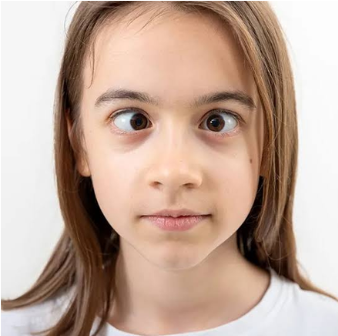
Squint is a condition in which the eyes do not maintain proper alignment while looking at an object. The deviation may involve one or both eyes and can vary in direction, frequency, and severity. It may develop during childhood or appear later in life due to abnormalities involving the eye muscles, nerves, vision, or other underlying conditions. Persistent misalignment can interfere with binocular vision and, particularly in children, may affect the development of normal visual function. Clinical evaluation includes assessment of ocular alignment, visual acuity, eye movements, and binocular vision to identify the type and possible cause. Early assessment is important because timely intervention can help preserve visual development and improve ocular alignment and functional outcomes.
Statistics for Squint
- Strabismus is estimated to affect around 1.81% of the global population.
- Approximately 2% of children are affected by some form of squint.
- Around 5% of the general population may have amblyopia (lazy eye), which can develop when childhood strabismus interferes with normal visual development.
- Inward deviation of the eye represents approximately 45%–50% of reported strabismus cases.
- Outward deviation accounts for roughly 28%–36% of cases.
- Approximately 20%–30% of children undergoing strabismus surgery may require an additional procedure for residual or recurrent misalignment.
Interesting Facts about Squint
-
- The eyes can point in different directions: Strabismus can affect one eye or alternate between both eyes, rather than always involving the same eye.
- It is not always constant: Some forms appear only at certain times, such as when a person is tired, ill, or focusing at a particular distance.
- Babies may temporarily appear cross-eyed: Occasional eye misalignment can occur during early infancy, but persistent deviation requires professional assessment.
- Adults can develop it too: Squint is not exclusively a childhood condition and can appear for the first time during adulthood.
- Eye alignment can change over time: A deviation that was previously controlled may become more noticeable or frequent as visual demands change.
- The brain plays an important role: Normal binocular vision requires the brain to combine information from both eyes into a single visual experience.
- The condition has a long history: Historical medical writings and artwork contain descriptions suggestive of eye misalignment, showing that strabismus has been recognized for centuries.
Introduction
Squint, medically termed strabismus, refers to an abnormal relationship between the alignment and movement of the two eyes. Under normal conditions, both eyes work together to maintain coordinated fixation on the same target, allowing the visual system to combine their information efficiently. In strabismus, this coordination is disturbed, resulting in a deviation of one eye relative to the other. The deviation may be inward, outward, upward, or downward and can occur continuously or intermittently. Squint is frequently recognized during childhood, when proper ocular alignment is particularly important for the development of binocular vision. However, it may also be identified for the first time in adults.
Types of Squint Based on the Direction of Eye Deviation
Esotropia (Inward Deviation)
The affected eye or eyes deviate toward the nose. It is commonly described as a crossed-eye appearance and may be present continuously or occur intermittently.
Exotropia (Outward Deviation)
The eye moves away from the nose toward the outer side of the face. The deviation may be more apparent during distance viewing, fatigue, or reduced visual attention.
Hypertropia (Upward Deviation)
One eye is positioned higher than the other, producing a vertical difference in ocular alignment. The upward deviation may remain constant or vary depending on the direction of gaze.
Hypotropia (Downward Deviation)
One eye is positioned lower than the fellow eye. This represents a vertical misalignment and may occur alone or alongside other forms of strabismus.
Mixed Deviation
In some individuals, horizontal and vertical deviations can occur together, producing a more complex pattern of ocular misalignment that requires detailed ophthalmic assessment.
Etiological Factors for Squint
Squint can arise from abnormalities affecting eye movement, vision, the nervous system, or the structures responsible for maintaining ocular alignment. Important etiological factors include:
Abnormal eye-muscle function
Weakness, overactivity, restriction, or poor coordination of the extraocular muscles can prevent the eyes from moving together accurately.
Refractive errors
Significant hypermetropia, myopia, or astigmatism can interfere with coordinated binocular vision and may contribute to ocular misalignment.
Cranial nerve disorders
Dysfunction of the third, fourth, or sixth cranial nerves, which control several extraocular muscles, can produce new-onset strabismus.
Amblyopia
Reduced visual development in one eye can weaken binocular coordination and may be associated with persistent ocular deviation.
Neurological disorders
Conditions affecting the brain, brainstem, or pathways controlling eye movements can lead to ocular misalignment.
Head injury
Trauma involving the head or orbit may damage ocular muscles or their nerve supply and subsequently cause strabismus.
Orbital abnormalities
Tumors, inflammation, fractures, or structural changes within the orbit can mechanically interfere with normal eye positioning.
Prematurity
Children born prematurely have a higher risk of developing strabismus, particularly when associated with other complications of prematurity.
Genetic predisposition
A family history of strabismus may increase susceptibility, suggesting that inherited factors contribute to its development.
Age-related changes
New-onset strabismus in adults can occur with changes in ocular motor control, muscle function, or underlying neurological or systemic disease and requires appropriate evaluation.
Signs and Symptoms of Squint
The clinical presentation of squint (strabismus) varies according to the type, degree, and consistency of eye deviation. Some features are readily visible, while others reflect disturbances in binocular vision and visual coordination. The symptoms include:
Visible ocular misalignment
One eye may deviate inward, outward, upward, or downward instead of maintaining the same line of fixation as the other eye.
Intermittent deviation
The eyes may appear aligned at some times and become misaligned at others, particularly during fatigue, illness, or prolonged visual tasks.
Abnormal head positioning
Tilting, turning, or raising the chin may be used to achieve a more comfortable visual position or improve alignment.
Closing or covering one eye
A person may habitually close one eye during bright light or visually demanding activities to improve visual comfort.
Difficulty with binocular vision
Misalignment can interfere with the ability of both eyes to work together as a coordinated pair.
Double vision (diplopia)
Adults with newly developed strabismus may experience two images of the same object because the eyes are directed toward different points.
Reduced vision in one eye
Persistent childhood misalignment can be associated with amblyopia, in which vision fails to develop normally despite the absence of adequate structural explanation.
Eye strain during visual tasks
Sustained reading, screen use, or near work may become uncomfortable when maintaining coordinated fixation is difficult.
Diagnosis of Squint
It involves a systematic ophthalmic assessment to determine whether the eyes are misaligned, the direction and magnitude of deviation, visual function, and the underlying cause. The diagnostic assessment is as follows:
Medical and Ocular History
The clinician records the age at which the deviation was first noticed, its duration, and whether it is constant or intermittent. Previous eye problems, trauma, surgery, neurological disorders, and systemic illnesses are reviewed. A family history of strabismus, amblyopia, or significant refractive errors is also considered.
Ocular Alignment Examination
The position of both eyes is observed while the patient looks at a fixation target. The examiner determines whether the deviation is horizontal, vertical, or combined.
Visual Acuity Assessment
Vision is measured separately for each eye and, when appropriate, with both eyes together. Differences in visual acuity between the eyes can suggest amblyopia or an underlying ocular disorder.
Hirschberg Test
A light is directed toward the patient’s eyes and the position of the corneal light reflex is observed. Differences in the location of the reflex between the two eyes provide an initial indication of ocular misalignment.
Measurement of Deviation
The magnitude of ocular deviation is measured using techniques such as prism cover testing. The result is commonly recorded in prism diopters (PD) and helps determine the severity and guide treatment planning.
Binocular Vision Assessment
Stereopsis (depth perception), fusion, and sensory cooperation may be assessed to understand the functional impact of the deviation.
Neurological and Systemic Evaluation
Newly developed strabismus, particularly in adults, may require assessment of cranial nerve function, pupils, facial movements, and other neurological findings.
Management of Squint
Management of squint is individualized according to the age of the patient, type and magnitude of deviation, visual acuity, binocular function, underlying cause, and presence of amblyopia. The management approaches include:
Corrective Eyewear
Appropriate spectacles are prescribed when refractive errors contribute to the deviation. Correcting significant hypermetropia, myopia, or astigmatism may improve ocular alignment and visual function.
Prism Correction
Prism lenses can redirect incoming light and reduce the visual effect of certain ocular deviations. They may be useful in selected patients, particularly those experiencing diplopia.
Vision and Orthoptic Therapy
Selected patients may benefit from exercises designed to improve binocular coordination, convergence, or fusional control. These approaches are particularly relevant to specific forms of convergence insufficiency and binocular vision disorders.
Botulinum Toxin
Botulinum toxin injections may be used in selected cases to temporarily weaken a specific extraocular muscle. It can be considered in certain adult or acute-onset strabismus cases and in situations where conventional surgery may not be immediately appropriate.
Strabismus Surgery
The procedure generally involves repositioning or altering the tension of selected extraocular muscles to improve eye alignment. Depending on the deviation, one or several muscles may be treated.
Ayurveda Insights
From an Ayurvedic perspective, squint may be viewed through the concepts of Drishti (vision), Netra (eye), Dosha, and the functional coordination of ocular tissues. Classical Ayurveda describes the eyes as closely associated with Alochaka Pitta, which supports visual perception, while Vata is responsible for movement and coordination. Disturbance of these functional principles may be considered in understanding abnormal ocular movement or alignment. Tarpana, Netra Parisheka, Seka, and suitable local therapies are traditionally described for maintaining ocular comfort and supporting eye health, while internal management may be selected according to the individual’s Dosha and clinical condition. Appropriate nutrition, adequate sleep, protection from excessive visual strain, and regular daily routines may also support overall ocular wellbeing.
Pathogenesis of Squint
In Ayurvedic interpretation, the development of ocular deviation can be understood through the disturbance of Netra-related functions and Vata-dominant neuromuscular activity. Vitiated Vata may interfere with the balanced action of the structures responsible for coordinated eye movement, resulting in unequal positioning of the visual axes. Alochaka Pitta, which governs the functional aspect of vision, may become secondarily affected when ocular coordination is disturbed. With continued imbalance, the normal relationship between Drishti, ocular movement, and fixation may become altered, producing persistent or intermittent deviation. Ayurveda also emphasizes the role of Dhatvagni and tissue nourishment; inadequate nourishment of the relevant ocular and neuromuscular structures may impair their functional efficiency.
Herbal Remedies for Squint by Planet Ayurveda
Planet Ayurveda is a well-established Ayurvedic healthcare organization that works to promote the ancient knowledge of Ayurveda through natural remedies and holistic health solutions. The company develops a wide range of herbal formulations using pure, high-quality ingredients and standardized herbal extracts, with a focus on maintaining safety, authenticity, and effectiveness. Following the principles of classical Ayurveda, Planet Ayurveda aims to support overall health by addressing the underlying causes of health concerns and encouraging balance in the body, mind, and emotions. With an emphasis on quality, natural ingredients, and traditional approaches supported by modern research, the organization works toward making Ayurvedic wellness solutions available globally. We will explore various herbal approaches used for the management of Squint according to Ayurvedic principles. The herbal formulations are:
- Tapyadi Loha
- Yastimadhu Ghan Vati
- Sameer Pannag Ras
Product description
1. Tapyadi Loha
It is a classical Ayurvedic formulation containing Triphala—Amalaki (Phyllanthus emblica), Haritaki (Terminalia chebula), and Vibhitaki (Terminalia bellirica)—along with Trikatu—Pippali (Piper longum), Maricha (Piper nigrum), and Shunthi (Zingiber officinale). It also contains Chitrakmool (Plumbago zeylanica), Vidanga (Embelia ribes), Pippalimula (Piper longum), Devadaru (Cedrus deodara), Daruharidra (Berberis aristata), Dalchini (Cinnamomum verum), and Chavya (Piper retrofractum). Its ingredients possess predominantly Deepana (appetite-enhancing) and Pachana (digestive) properties, which may help maintain proper Agni and support the nourishment of body tissues. From an Ayurvedic perspective, maintaining healthy tissue metabolism may indirectly support the functional health of the ocular system.
Dosage: 1 tablet twice a day with warm water.
2. Yastimadhu Ghan Vati
Its principal ingredient, Yashtimadhu (Glycyrrhiza glabra), is traditionally described as Madhura, Guru, and Snigdha, with nourishing and soothing properties. From an Ayurvedic perspective, Yashtimadhu may support Vata-Pitta balance, promote proper tissue nourishment, and help maintain the functional health of the Netra (ocular system). Its Rasayana and Brimhana attributes may be useful as part of an individualized regimen aimed at supporting ocular strength and overall nourishment.
Dosage: 1 tablet twice a day.
3. Sameer Pannag Ras
It may be considered in an Ayurvedic approach to squint (strabismus) as a specialized herbo-mineral formulation intended to support Netra Bala (ocular strength) and functional balance. It contains Shuddha Gandhak (purified sulfur), Ghrit Kumari Ras (Aloe vera juice), Shuddha Mansheel (purified realgar), Shuddha Parad (purified mercury), Hartal (purified orpiment), and Swarna (gold). From an Ayurvedic perspective, its formulation may be considered for supporting Vata-Pitta balance, tissue nourishment, and overall ocular function.
Dosage: 125 mg once a day after meals with warm water or honey.
Ayurvedic Procedures in Management of Squint
Bahya Trataka
- Bahya Trataka is a traditional yogic practice involving steady, focused gazing at an external object. In the context of squint (strabismus), it may be considered a supportive visual practice aimed at improving concentration, visual awareness, and voluntary control of eye movements.
- The practitioner should sit comfortably in a stable position with the spine erect and select a stationary object placed at a comfortable distance, such as a small mark or symbol on a wall.
- The object should be clearly visible without causing eye strain. After relaxing the body and maintaining natural breathing, the practitioner gently directs both eyes toward the selected point and attempts to maintain a steady gaze without excessive blinking or forceful contraction of the eye muscles.
- Initially, the practice may be performed for a short duration, followed by relaxed blinking and closing of the eyes. With gradual adaptation, the duration can be increased according to comfort.
- From an Ayurvedic perspective, Trataka may support Indriya Bala (sensory strength), concentration, and functional coordination of the Netra (eyes).
Netra Tarpana
- Netra Tarpana is a classical ocular procedure in which medicated ghrita (clarified butter) or another suitably selected preparation is retained around the eyes for a prescribed period.
- In an Ayurvedic approach to squint (strabismus), it may be considered as a supportive procedure for maintaining Netra Bala (ocular strength) and promoting nourishment of the structures surrounding the eyes.
- The procedure is traditionally selected according to Dosha, Prakriti, age, ocular condition, and overall health. A medicated ghrita is placed within a properly constructed ring around the closed eyes, allowing the preparation to remain in contact with the periocular region for a specified duration under supervision.
- From an Ayurvedic perspective, Netra Tarpana may help maintain ocular comfort, reduce dryness and fatigue, and support normal sensory function.
Shashtika Shali Pinda Sweda
- Shashtika Shali Pinda Sweda is a classical Ayurvedic Swedana (sudation and fomentation) procedure in which warm boluses prepared from Shashtika Shali rice are gently applied to selected areas of the body using a nourishing herbal milk decoction.
- Shashtika Shali is a special variety of rice traditionally regarded as Brimhana (nourishing), Balya (strength-promoting), and Vata-pacifying.
- In an Ayurvedic approach to squint (strabismus), this therapy may be considered as a supportive measure when Vata predominance, muscular weakness, stiffness, or impaired neuromuscular coordination is associated with the clinical presentation.
- The warm, nourishing application may help promote local relaxation, tissue nourishment, and functional comfort.
- The procedure is generally performed by dipping prepared rice boluses in a warm milk-based decoction and applying them with gentle, rhythmic movements over appropriate regions, according to the individual’s condition.
- It should be selected according to Prakriti, Dosha, Bala, age, and clinical status.
Conclusion
Successful management of squint requires timely recognition, individualized assessment, and a treatment plan based on the underlying cause, age, visual status, and degree of ocular deviation. Regular monitoring is particularly important in children to protect binocular vision and reduce the risk of long-term visual impairment. Supportive measures should focus on maintaining ocular comfort, healthy visual habits, adequate nutrition, and overall wellbeing. From an Ayurvedic perspective, individualized care based on Dosha balance, Netra Bala, Agni, and proper daily routine may be incorporated as complementary support.
