
 Email-Id :
 Contact Us : 0172-521-4040 (India), +91-172-521-4040 (Outside India)
Description
Introduction
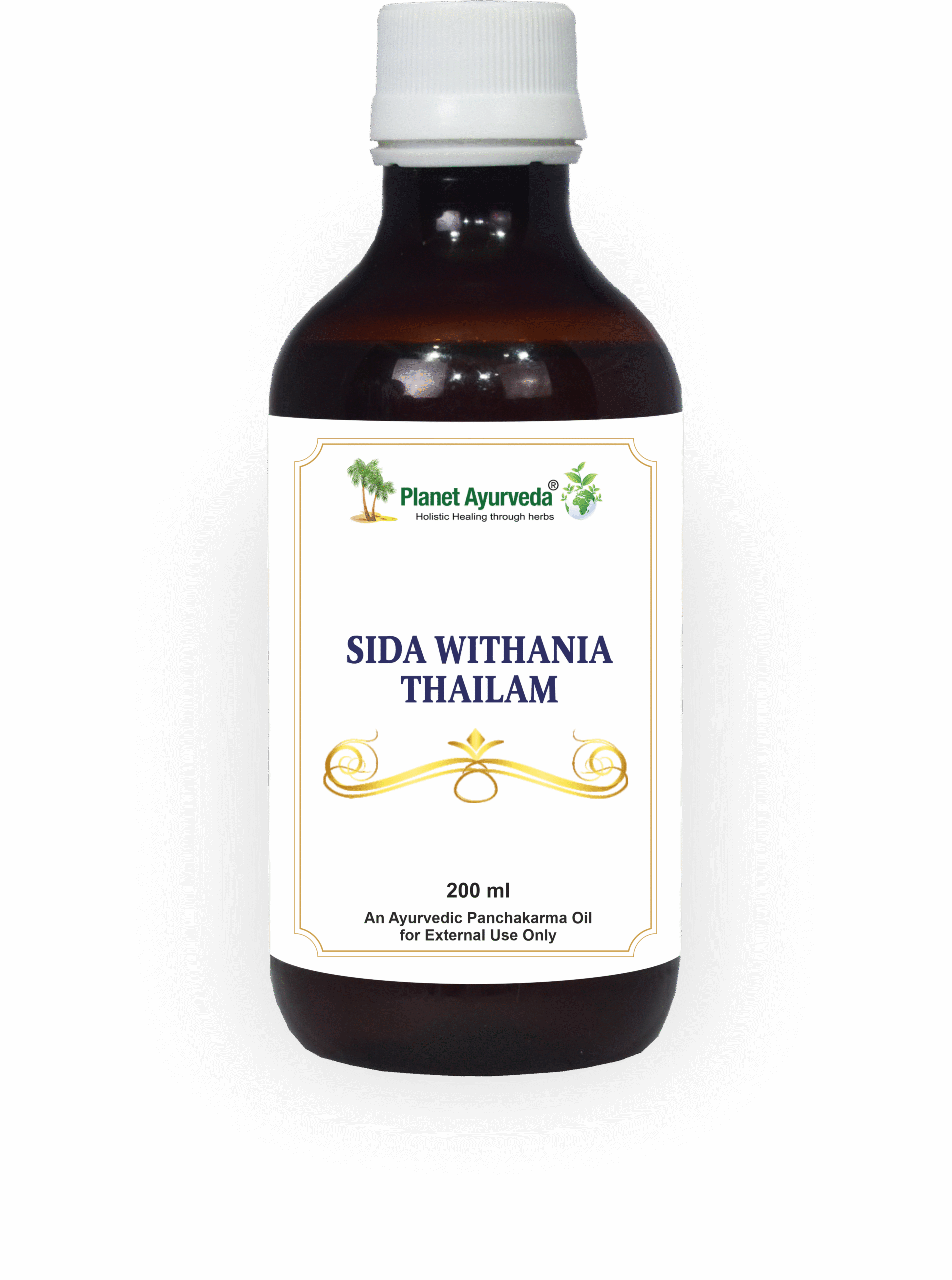
Sida Withania Thailam by Planet Ayurveda is an Ayurvedic medicated oil inspired by the classical formulation Bala Ashwagandha Thailam. It contains herbs such as Bala (Sida cordifolia) and Ashwagandha (Withania somnifera), traditionally valued for their nourishing, revitalising, and strengthening properties. The formulation follows Ayurvedic principles of oil-based care for conditions associated with aggravated Vata Dosha. Massage with this oil is traditionally used to support muscle comfort, physical strength, flexibility, and relaxation. Its nourishing qualities make it relevant to Ayurvedic care for muscular weakness and reduced mobility, while the soothing massage may also encourage relaxation and restful sleep. Sida Withania Thailam brings together traditional herbal knowledge and therapeutic oil massage to support overall physical comfort and well-being.
Ancient Verse
बलाश्वगन्धालाक्षाणां कषाये पादावशेषिते ।
तैलप्रस्थं पचेद्धीमान्दधिमस्तुचतुर्गुणे ॥
रास्नाचन्दनमञ्जिष्ठादूर्वामधुकचोरकैः ।
सारिवोशीरजलदकुष्ठागरसुरद्रुमैः ॥
हरिद्राकुमुदाकौन्ती शताह्वापद्मकेसरैः ।
कल्करैभिः सुसंयुक्तैः कार्षिकैश्च सुपेषितैः ॥
शनैर्मृद्वग्निना पक्त्वा गालयेद्भाजने शुभे ।
प्रशस्ते तिथिनक्षत्रे तैलमेतत्तु शीलयेत् ॥
तेन सर्वज्वरोन्मादक्षयकासादयो गदाः ।
नश्यन्ति विविधाश्चैव वातरोगान संशयः ॥
अश्विभ्यां निर्मितं तैलमेतत्पुष्टिकरं परम् ॥
Sahasrayoga (Tailayoga Prakarana, Chapter 13)
The verse describes the preparation and traditional therapeutic properties of Bala Ashwagandha Taila. A decoction of Bala (Sida cordifolia), Ashwagandha (Withania somnifera), and Laksha (lac resin) is prepared and reduced to one-quarter of its original volume. Sesame oil is then cooked with this decoction and four times its quantity of curd whey, along with a finely ground herbal paste containing Rasna (Pluchea lanceolata), Chandana (sandalwood), Manjishtha (Rubia cordifolia), Durva (Cynodon dactylon), Madhuka (licorice), Choraka, Sariva (Hemidesmus indicus), Ushira (vetiver), Jalada, Kustha (Saussurea costus), Agaru (agarwood), Suradaru (deodar), Haridra (turmeric), Kumuda (white water lily), Kaunti, Shatahva (dill), and Padmakesara (lotus stamens), each in a quantity of one Karsha (approximately 12 g). The mixture is cooked slowly over a mild flame, then filtered and stored in a suitable, clean vessel. The verse recommends preparing and using this oil at an auspicious time and traditionally attributes it to its nourishing and strengthening properties, along with benefits in conditions such as fever, mental disturbance, wasting disorders, cough, and various Vata-related disorders. It concludes by describing the oil as a highly nourishing preparation associated with the Ashwini Kumaras, the divine physicians of Ayurveda.
Ingredients
| Sr. No. | Herb Name | Latin Name | Part Used | Qty. |
| 1. | Rasna | Pluchea lanceolata | Leaves | 1 part |
| 2. | Manjishtha | Rubia cordifolia | Root | 1 part |
| 3. | Durva | Cynodon dactylon | Whole Plant | 1 part |
| 4. | Madhuka | Madhuca indica | Flower, Seed & Oil | 1 part |
| 5. | Chora (Kachora) | Angelica glauca | Roots | 1 part |
| 6. | Sariva | Hemidesmus indicus | Roots | 1 part |
| 7. | Ushir | Vetiveria zizanioides | Roots | 1 part |
| 8. | Mustak | Cyperus rotundus | Rhizome | 1 part |
| 9. | Devdaru | Cedrus deodara | Bark & Leaves | 1 part |
| 10. | Haridra | Curcuma longa | Rhizomes | 1 part |
| 11. | Kumuda | Nymphaea alba | Whole Plant | 1 part |
| 12. | Renuka | Vitex agnus-castus | Seeds | 1 part |
| 13. | Shathahwa | Anethum sowa | Seeds | 1 part |
| 14. | Padmakesara | Nelumbo nucifera | Leaves | 1 part |
| 15. | Til Tail | Sesamum indicum oil | Seed Oil | 4 parts |
| 16. | Bala | Sida cordifolia | Roots | 1 part |
| 17. | Ashwagandha | Withania somnifera | Roots | 1 part |
| 18. | Dadhi Masthu | Curd | Supernatant liquid | 1 part |
Ingredients with Description
Rasna (Pluchea lanceolata)
Rasna contains phytochemicals such as moretenol, neolupenol, stigmasterol, beta-sitosterol-D-glucoside, quercetin, and isorhamnetin. These constituents are associated with anti-inflammatory, antioxidant, and pain-relieving activities, supporting its traditional use for joint discomfort, stiffness, and Vata-related musculoskeletal conditions, including spondylosis.
Manjishtha (Rubia cordifolia)
Manjishtha contains anthraquinones such as purpurin, munjistin, alizarin, and rubiadin, along with glycosides, tannins, flavonoids, iridoids, and triterpenoids. These compounds are associated with antioxidant activity and support for healthy circulation, while its traditional Ayurvedic use includes maintaining tissue health and supporting the management of inflammatory conditions.
Durva (Cynodon dactylon)
Durva contains flavonoids such as luteolin, apigenin, orientin, and vitexin, as well as phenolic compounds including hydroquinone, ferulic acid, and syringic acid. These constituents contribute to its antioxidant properties and potential tissue-protective effects, while Durva is traditionally valued for its soothing and restorative qualities.
Madhuka (Madhuca indica)
Madhuka contains madhucosides A and B, misaponins A and B, triterpenoids such as alpha-amyrin, beta-amyrin, lupeol acetate, betulinic acid, and oleanolic acid, along with flavonoids including quercetin, myricetin, kaempferol, and gallic acid. These constituents contribute to its diverse biological properties, while the plant is traditionally valued for nourishment and support of general physical well-being.
Chora (Kachora – Angelica glauca)
Chora contains essential oils, flavonoids, coumarins, phthalides, and various mono- and sesquiterpenes. These constituents contribute to its aromatic and potentially anti-inflammatory properties, while its traditional use in Ayurvedic formulations supports the management of stiffness and discomfort associated with Vata-related conditions.
Sariva (Hemidesmus indicus)
Sariva contains triterpenoids such as lupeol, alpha-amyrin, beta-amyrin, and 3-keto-lup-12-en-21→28-olide, together with steroids, glycosides, Hemidesmin I and II, beta-sitosterol, indicine, hemidine, pregnane oligoglycosides, and flavonoids such as rutin and hyperoside. These compounds contribute to its antioxidant and other biological activities, while Sariva is traditionally valued for its soothing properties and role in supporting overall well-being.
Ushira (Vetiveria zizanioides)
Ushira contains aromatic constituents such as vetiverol and khusimol, which contribute to its characteristic fragrance and cooling, soothing qualities. Its aromatic oil is traditionally used to promote relaxation and comfort, making it a valued ingredient in preparations intended to support calmness and general well-being.
Mustak (Cyperus rotundus)
Mustak contains sesquiterpenes and volatile oil constituents that contribute to its potential anti-inflammatory and antioxidant activities. Traditionally valued for supporting digestive function and balancing Vata-related disturbances, it adds aromatic and therapeutic qualities to multi-herb formulations
Devadaru (Cedrus deodara)
Devadaru contains sesquiterpenes, including himachalene-related compounds, as well as cedrol and other aromatic constituents. These compounds are associated with anti-inflammatory and soothing properties, supporting the traditional use of Devadaru in formulations intended to relieve muscular discomfort and stiffness.
Haridra (Curcuma longa)
Haridra is rich in curcumin, a well-known bioactive compound with antioxidant and anti-inflammatory properties. By helping counter oxidative stress and inflammatory processes, curcumin contributes to turmeric’s value in traditional formulations designed to support tissue health and physical comfort.
Kumuda (Nymphaea alba)
Kumuda contains alkaloids reported as nupharine, nymphaeine, and nupharidine, along with flavonoids such as quercetin, kaempferol, apigenin, isokaempferide, luteolin, and their glycosides. These constituents contribute to its varied biological properties, while Kumuda is traditionally valued for its cooling and soothing qualities that support relaxation.
Renuka (Vitex agnus-castus)
Renuka contains flavonoids such as vitexin, isovitexin, casticin, orientin, isoorientin, and luteolin, together with iridoid glycosides including agnuside and aucubin, and diterpenoids such as vitexilactone and rotundifuran. These compounds contribute to its pharmacological profile; however, claims about neurotransmitter regulation, improved sleep, or recovery from paralysis require specific evidence and should not be inferred from composition alone.
Shatahva (Anethum sowa)
Shatahva contains volatile constituents such as carvone and limonene, along with sulphated flavonoids. These compounds contribute to its aromatic and digestive properties, and the herb is traditionally used to support digestion and comfort in formulations prepared according to Ayurvedic principles.
Padmakesara (Nelumbo nucifera)
Lotus contains alkaloids such as nuciferine and flavonoids, including quercetin and kaempferol derivatives. These constituents are associated with antioxidants and other biological activities, while lotus is traditionally valued for its soothing qualities. The exact phytochemical profile depends on the plant part used in the formulation.
Tila Taila (Sesamum indicum oil)
Sesame oil contains sesamin, sesamol, and vitamin E compounds, which contribute to its antioxidant properties. Its oily, emollient nature helps lubricate the skin and supports massage, while its nourishing and Vata-pacifying qualities make it an important base in traditional Ayurvedic medicated oils.
Bala (Sida cordifolia)
Bala contains phytosterols, flavonoids—including quercetin and kaempferol derivatives—and several isoprenylated flavones; ephedrine-type alkaloids have also been reported in some material. These constituents contribute to its chemical profile, while Bala is traditionally regarded as a strengthening and nourishing herb used in Ayurvedic preparations for Vata-related musculoskeletal complaints.
Ashwagandha (Withania somnifera)
Ashwagandha contains withanolides, steroidal lactones, and saponins, which are associated with its adaptogenic and other biological activities. Traditionally used to support strength and resilience, it is valued in Ayurvedic formulations intended to promote physical well-being, relaxation, and healthy stress responses.
Dadhi Mastu (curd)
Dadhi Mastu is the liquid separated from curd and may contain lactic acid, residual nutrients, enzymes, and microorganisms, depending on its preparation. In traditional formulations, it serves as a liquid processing ingredient; its contribution to the final preparation depends on the method of preparation and the quality of the curd.
Indications of Sida Withania Thailam
- Vata-related disorders
- Joint stiffness and restricted mobility
- Muscular weakness and muscle wasting
- Muscle spasms and associated discomfort
- Paralysis and movement impairment
- General physical weakness and wasting disorders
- Insomnia and disturbed sleep
- Traditional Ayurvedic support in cough and fever-associated conditions
Benefits of Sida Withania Thailam
Helps Ease Joint Stiffness
Its nourishing, oil-based application supports joint comfort and flexibility, particularly when stiffness is associated with aggravated Vata Dosha (the Ayurvedic principle governing movement).
Supports Mobility
Regular massage, when appropriate, may help maintain comfortable movement and flexibility in muscles and joints.
Promotes Relaxation
Gentle massage with the oil can help soothe muscular tension and encourage physical relaxation.
Supports Traditional Care in Vata-Related Disorders
The classical formulation is valued in Ayurveda for its Vata-pacifying properties and its traditional use in conditions associated with weakness and impaired movement.
Nourishes the Body
Bala (Sida cordifolia) and Ashwagandha (Withania somnifera) are traditionally regarded as strengthening and nourishing herbs, making them important ingredients in restorative Ayurvedic oil preparations.
Supports Comfort in Muscular Discomfort
The combined use of herbal ingredients and therapeutic massage may help relieve feelings of tightness and discomfort in the muscles.
Encourages General Well-Being: As part of an appropriate Ayurvedic care routine, the oil may support relaxation, physical comfort, and a sense of well-being.
Panchkarma Uses of Sida Withania Thailam
Sida Withania Thailam, based on the traditional Bala Ashwagandha Taila formulation described in Sahasrayoga (Tailayoga Prakarana, Chapter 13), may be incorporated into selected Panchakarma procedures according to Ayurvedic assessment. Its traditional nourishing and Vata-pacifying properties make it relevant to therapies aimed at supporting physical comfort, muscle function, and mobility.
Abhyanga (Therapeutic Oil Massage)
Massage with Sida Withania Thailam is traditionally used to nourish the body and support muscle strength, flexibility, and relaxation. It may be considered in Ayurvedic care for muscular stiffness, weakness, and reduced mobility associated with Vata aggravation. It may also be used alongside other medicated oils, such as Dhanwantharam Taila, when advised by an Ayurvedic practitioner.
Janu Basti (Retained Oil Therapy for the Knee)
In Janu Basti, warm medicated oil is retained within a specially formed boundary over the knee. Sida Withania Thailam may be selected to support local comfort, reduce the feeling of stiffness, and facilitate movement in the surrounding tissues. The procedure is generally considered when knee discomfort or restricted mobility is present.
Kati Basti (Retained Oil Therapy for the Lower Back)
Kati Basti involves retaining warm oil over the lower-back region for a prescribed period. When clinically appropriate, Sida Withania Thailam may be used to support relaxation of the surrounding muscles and improve comfort during movement. This procedure is traditionally incorporated into Ayurvedic care for lower-back stiffness and Vata-related discomfort.
Anuvasana Basti (Medicated Oil Enema)
Anuvasana Basti is a specialised Ayurvedic procedure in which medicated oil is administered rectally under professional supervision. Bala Ashwagandha-based oil may be considered in selected Vata-related conditions where this procedure is indicated. Because it involves internal administration, the oil must be suitable for this route and prescribed by a qualified Ayurvedic physician; an oil intended only for external massage should not be used as an enema.
Griva Basti (Retained Oil Therapy for the Neck)
Griva Basti involves retaining warm medicated oil over the cervical region. Sida Withania Thailam may be selected to support local relaxation and comfort in cases of neck stiffness and muscular tension. The procedure may complement an individualised Ayurvedic management plan intended to maintain neck mobility.
Note: Sida Withania Oil may be combined with Mahanarayan Oil in selected Basti (medicated enema) procedures, as recommended by a qualified Ayurvedic practitioner.
Modern Researches
A clinical study by Alpana Majumder and P. B. Kar Mahapatra, published in the International Research Journal of Ayurveda & Yoga in 2021, evaluated an Ayurvedic treatment approach for Vishwachi, correlated by the authors with cervical degenerative disc disease. The study included 18 patients who received Nasya (nasal therapy) using Rasna–Bala–Ashwagandha medicated oil along with oral administration of a decoction prepared from the same herbs for 21 days. The researchers assessed symptoms associated with the condition, including pain, stiffness, and weakness affecting the neck and upper limbs. According to the published abstract, significant improvement was reported across all assessed signs and symptoms. The authors concluded that the combined treatment regimen showed beneficial results in managing the condition.
Directions for Use (For External Use Only)
Apply gently on the affected site of the body, keep it for 6–8 hours at least for best results or as directed by Ayurvedic Physician.
Conclusion
Sida Withania Oil by Planet Ayurveda is an Ayurvedic medicated oil inspired by the traditional Bala Ashwagandha Taila formulation described in Sahasrayoga (Tailayoga Prakarana, Chapter 13). Enriched with Bala (Sida cordifolia) and Ashwagandha (Withania somnifera), it reflects the Ayurvedic approach to nourishment, strengthening, and balancing aggravated Vata Dosha (the principle governing movement). Its traditional applications include therapeutic oil massage (Abhyanga) and selected Panchakarma procedures to support muscular comfort, flexibility, relaxation, and mobility. When incorporated into an individualised Ayurvedic care plan, Sida Withania Oil offers a traditional approach to promoting physical comfort and overall well-being.



Reviews
There are no reviews yet.