
 Email-Id :
 Contact Us : 0172-521-4040 (India), +91-172-521-4040 (Outside India)
Description
Introduction
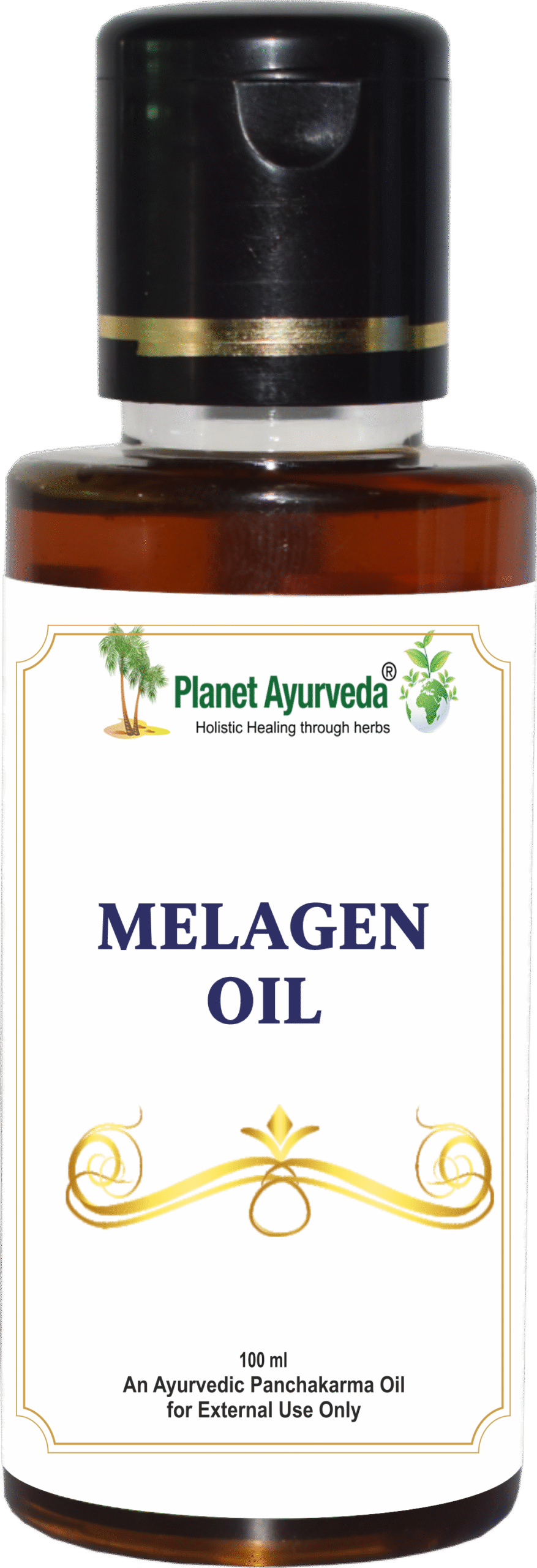
Melagen Oil by Planet Ayurveda is inspired by the traditional Ayurvedic formulation Bakuchi Tailam, which contains Bakuchi as its primary ingredient and is used in classical Ayurvedic skin-care practices, particularly for pigmentation-related concerns. Melagen Oil by Planet Ayurveda is an Ayurvedic herbal oil formulated for external application on areas of skin affected by reduced pigmentation, including white patches. It contains traditionally used herbs such as Bakuchi (Psoralea corylifolia), Kutaj (Holarrhena antidysenterica), and Manjishtha (Rubia cordifolia), along with Neem (Azadirachta indica) and Coconut Oil (Cocos nucifera). The formulation draws on traditional Ayurvedic skin-care practices. Bakuchi is traditionally associated with skin care, while coconut oil helps moisturise the skin. Melagen Oil is intended for topical use on the affected areas, following the product instructions or advice from a qualified Ayurvedic physician. Melagen Oil can be incorporated into a personalised skin-care routine as part of an Ayurvedic approach to pigmentation concerns. Its convenient topical application makes it suitable for targeted skin care.
Ancient Verse of Bakuchi
सोमवल्ली कालमेषी कुष्ठघ्नी च प्रकीर्त्तिता ।
बाकुची मधुरा तिक्ता कटुपाका रसायनी ॥
विष्टम्भहृद्धिमा रुच्या सरा श्लेष्मास्त्रपित्तनुत् ।
रूक्षा हृद्या श्वास्कुष्ठमेहज्वरकृमिप्रणुत् ॥
तत्फलं पित्तलं कुष्ठकफानिलहरं कटु ।
केश्यं त्वच्यकृमिश्वासकासशोथामपाण्डुनुत् ॥
(Bhavprakash Nighantu Haritkyadi varga 207-209)
This Ayurvedic text describes the properties and medicinal benefits of Bakuchi (Psoralea corylifolia) and its seeds/fruit. Known by synonyms such as Somavalli, Kalameshi, and Kushthaghni (destroyer of skin diseases), Bakuchi is characterized as sweet and bitter in taste, pungent after digestion (katupaka), rejuvenating (rasayani), cooling, appetizing, laxative, and dry in nature, making it effective in pacifying Kapha, Rakta (blood disorders), and Pitta. It helps relieve constipation, promotes heart health, and treats conditions like asthma, skin disorders (including vitiligo/psoriasis), diabetes/urinary disorders, fever, and worm infestations. Its fruit is pungent and mildly Pitta-aggravating, yet potent in alleviating skin diseases, Kapha-Vata imbalances, edema, indigestion/toxins (Ama), anemia, cough, and dyspnea, while promoting skin and hair health.
Ingredients
| Sr. No. | Herb Name | Latin Name | Part Used | Qty. |
| 1. | Bakuchi | Psoralea corylifolia | Seed | 1 gm |
| 2. | Kutaj | Holarrhena antidysenterica | Seed | 1 gm |
| 3. | Manjishtha | Rubia cordifolia | Stem | 300 mg |
| 4. | Neem | Azadirachta indica | Fruit | 200 mg |
| 5. | Coconut Oil | Cocos nucifera | Fruit Oil | 11 ml |
Ingredients with Description
1. Bakuchi (Psoralea corylifolia)
Bakuchi is an important herb in traditional Ayurveda, particularly in formulations used for skin pigmentation concerns such as vitiligo (Shwitra). Its seeds contain psoralen and related compounds that interact with the skin’s response to ultraviolet light and have been studied in pigmentation therapy. In Ayurvedic practice, Bakuchi is valued for its traditional role in supporting the management of white patches and promoting pigmentation-related skin care.
2. Kutaj (Holarrhena antidysenterica)
Kutaj is a traditionally valued Ayurvedic herb known for its astringent properties and use in various classical formulations. It contains alkaloids, including conessine, and has been studied for several biological activities. In herbal skin-care formulations, Kutaj contributes to a traditional approach to maintaining skin health and caring for affected areas.
3. Manjishtha (Rubia cordifolia)
Manjishtha is widely used in Ayurveda for skin care and is traditionally associated with supporting healthy skin and complexion. It contains phytochemicals such as alizarin and purpurin, which have been investigated for their biological properties. In Ayurvedic formulations, Manjishtha is valued as part of a holistic approach to skin health and is traditionally used in preparations intended for various skin concerns. Its role in vitiligo care is supportive within traditional practice rather than a proven method of restoring skin pigment.
4. Neem (Azadirachta indica)
Neem is a well-known Ayurvedic herb traditionally used in skin-care preparations. Its leaves and other plant parts contain compounds such as nimbin and nimbolide, which have been studied for their antimicrobial and anti-inflammatory properties. In topical herbal formulations, Neem is valued for supporting skin hygiene and maintaining healthy skin. For people with vitiligo, it may contribute to general skin care, although it has not been established as a treatment that restores pigmentation.
5. Coconut Oil (Cocos nucifera)
Coconut oil is a natural emollient commonly used to moisturise and soften the skin. It contains fatty acids, particularly lauric acid, which help support the skin barrier and reduce moisture loss. In an herbal oil formulation, coconut oil provides a nourishing base that helps keep the skin supple and comfortable. For people with vitiligo, moisturising the affected areas can support general skin care.
Indications of Melagen Oil
- White patches associated with vitiligo (Shwitra) and leucoderma.
- Skin areas with reduced pigmentation.
- Uneven skin tone and pigmentation irregularities.
- Dark facial patches associated with melasma.
- Freckles and other visible pigmentation variations.
- Dry, dull skin requiring moisturisation and nourishment.
- External skin care for affected areas in people with leprosy, alongside prescribed medical treatment.
- Skin care support for cutaneous candidiasis, alongside appropriate antifungal treatment.
Benefits of Melagen Oil
Helps Nourish the Skin
Melagen Oil helps nourish the skin and maintain its natural softness. Regular application may help keep the skin feeling smooth, supple, and well cared for.
Supports Skin Hydration
The oil helps maintain skin moisture and reduce dryness, leaving the skin feeling softer and more comfortable.
Helps Improve Skin Texture
Regular skin care with Melagen Oil may help improve the appearance of rough or dry skin, promoting a smoother and healthier-looking complexion.
Supports an Even-Looking Skin Tone
Melagen Oil can be incorporated into a skincare routine for areas with uneven skin tone.
Helps Maintain Skin Softness
Applying the oil may help soften dry skin and maintain its suppleness, particularly when the skin feels rough or tight.
Supports the Skin’s Natural Protective Barrier
By helping reduce moisture loss, an oil-based skincare product may support the skin’s natural barrier and protect it from excessive dryness.
Helps Maintain Healthy-Looking Skin
Consistent application, when suitable for the individual’s skin type, may help maintain a smooth, moisturised, and well-nourished appearance.
Usage of Melagen Oil
Gently spread the oil over the affected area and leave it on the skin for 6–8 hours, or follow the application instructions provided by your Ayurvedic physician.
Special Note
Bakuchi (Psoralea corylifolia) should be used under the guidance of a qualified Ayurvedic physician. It contains photosensitising compounds, particularly psoralen and isopsoralen, which can increase the skin’s sensitivity to sunlight. Improper application, excessive use, or uncontrolled sun exposure may cause redness, itching, burning, blistering, and other skin reactions. The physician can recommend the appropriate formulation, dosage, method of application, and duration of use according to the individual’s skin condition. Avoid self-medication and deliberate sun exposure after applying Bakuchi unless specifically advised by a qualified healthcare professional.
Modern Researches
A 2026 review by Godaree et al., titled “Bakuchi (Psoralea corylifolia Linn.) in the Management of Shwitra (Vitiligo): Classical Perspectives and Contemporary Evidence,” published in the Journal of Medicinal Plants Studies, examined the traditional Ayurvedic use and scientific evidence of Bakuchi for vitiligo. The review highlighted that Bakuchi contains active compounds, particularly psoralen, isopsoralen, and bakuchiol, which have been associated with increased melanin production, antioxidant activity, and effects on inflammation and immune responses. It also discussed clinical findings, including a study of 50 patients in which Bakuchi-containing Shvitrahara Kashaya and Lepa were associated with approximately 80% improvement in pigmentation, lesion size, and the number of depigmented lesions after six months. Other studies reviewed also reported encouraging pigmentation outcomes with Bakuchi-based treatments. The authors concluded that Bakuchi has potential in vitiligo management, but larger, well-designed clinical trials and long-term safety studies are needed.
DIRECTIONS TO APPLY
To apply Melagen oil on the skin, open the bottle, take a few drops of the oil and apply it over the affected area. Make note that the skin is cleaned properly before applying the oil.
Conclusion
Melagen Oil by Planet Ayurveda combines the traditional wisdom of Ayurveda with herbal skin-care practices. Inspired by Bakuchi Tailam, this formulation brings together traditionally valued botanical ingredients to support a nourishing skin-care routine. Its oil-based preparation helps maintain skin softness and moisture, making it a valuable addition to personalised skin care. With regular use as directed by a qualified Ayurvedic physician, Melagen Oil can be incorporated into a holistic approach to caring for skin affected by pigmentation changes.


Reviews
There are no reviews yet.